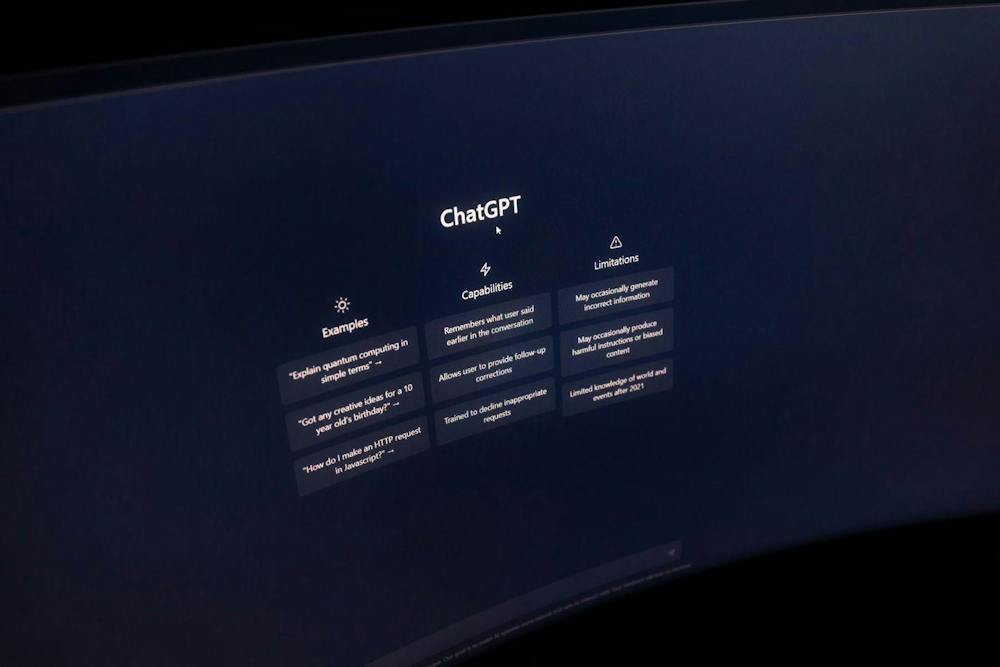
Generative artificial intelligence is now a part of university life. A 2024 Digital Education Council survey of 3,839 students across 16 countries found that 86% regularly used AI in their studies. It can appear during revision sessions, research and the difficult first hour of an essay. Its popularity leaves universities with a practical problem: a chatbot can produce a tidy answer in seconds, yet the information underneath may be old, incomplete or fabricated. Knowing how to ask a question is useful. Knowing when to doubt the response matters more.
Suppose an undergraduate asks a chatbot for the current XRP to USD conversion rate while researching changing online data. On Sept. 20, Binance displayed an XRP price of about $1.38 and $3.5 billion in 24-hour volume. The page showed an update time of 5:54 a.m. UTC. Those figures could be different when the project is graded, so the date belongs beside them in a submission. Employment reports and scientific databases present the same research problem: what if the data changes between the time of development and review?
Why has AI literacy become an academic priority?
Campus discussions about AI often concentrate on plagiarism, but that covers only one part of the issue. Someone can write an assignment independently and still rely on an AI’s inaccurate summary, citation of a nonexistent paper or use of a statistic stripped of context.
AI literacy means recognizing those risks and deciding which tasks can reasonably be handed to a tool, and what is better suited for traditional search methods. Having AI generate alternative search terms may help when a library search has stalled. But judging whether resulting papers support an academic argument cannot be delegated to a bot so easily. Sometimes the right next step for students is an office hours conversation. If an assignment is unclear, repeated prompts may produce several versions of the same mistaken assumption.
What can go wrong when an answer sounds convincing?
A fabricated reference rarely looks obviously fake. It may include a believable title, journal name, publication year and authors whose work sounds relevant.
A student researching sleep and academic performance could receive exactly that sort of convincingly fictitious citation. It fits the topic, so it goes into the students’ notes. Later, the student searches the library database and finds nothing. The journal exists but never published the paper. One supposed author researches an unrelated subject, while the other has no matching academic record. The mistake is easy to catch once someone checks. But without that step, the reference might remain because its formatting looks right. Fluent language can give unsupported information more credibility than it deserves, increasing the risk that students miss false AI results.
How can students check AI-generated claims?
Not every suggestion needs a lengthy investigation. If an AI tool proposes changing the order of two paragraphs, the risk is limited. An AI’s report of a quotation, numerical finding or description of a study deserves closer attention. The most useful habit is opening the original material. A researcher can then confirm the author, date and relevant passage. Checking sample size and methodology matters too. A genuine paper based on 30 volunteers cannot automatically support a claim about all university students.
The American Library Association’s Framework for Information Literacy for Higher Education treats a source’s authority as dependent on context and research as an ongoing inquiry. A university report, personal account and peer-reviewed study may each contribute something to a student’s research, but they do not provide equivalent evidence. In the Digital Education Council survey, 58% of respondents felt they lacked sufficient AI knowledge and skills. Another 72% wanted their universities to offer more training.
How should universities set clearer AI rules?
The boundary between what constitutes AI assistance and unacceptable substitution changes between assignments. Brainstorming may be allowed in a history seminar where generated prose is prohibited. A computer science instructor might permit AI explanations of errors but require students to write and understand their submitted code.
A vague warning near the end of a syllabus does not answer common questions. Course guidance should include examples covering outlining, proofreading, translation and source discovery. Students must also know what they need to disclose.
A recent argument that professors should retain take-home essays despite concerns about AI reflects a wider campus dilemma. Removing take-home work could eliminate a valuable form of sustained writing. Assignments connected closely to classroom discussions, drafts and specific readings may work better than treating all unsupervised work as suspect. Disclosure can remain brief. A note saying that a tool suggested search terms or checked grammar is more useful than stating only that “AI was used.”
Which skills will matter as AI improves?
Future AI systems may invent fewer citations and handle context more accurately. That will make them more useful, but occasional errors may also become harder to notice. A strange answer invites suspicion. A polished one often does not.
The necessary checks are ordinary research habits rather than technical expertise. Open the paper, read the quoted passage and record the date beside a changing figure. AI may shorten the route to an answer, but students still need to know where that answer came from before placing it in submitted work.