K: Hey any chance you want to go to an Arabic singer’s concert in Paris
K: I bought a ticket last spring but it got rescheduled to September and idk how to sell it
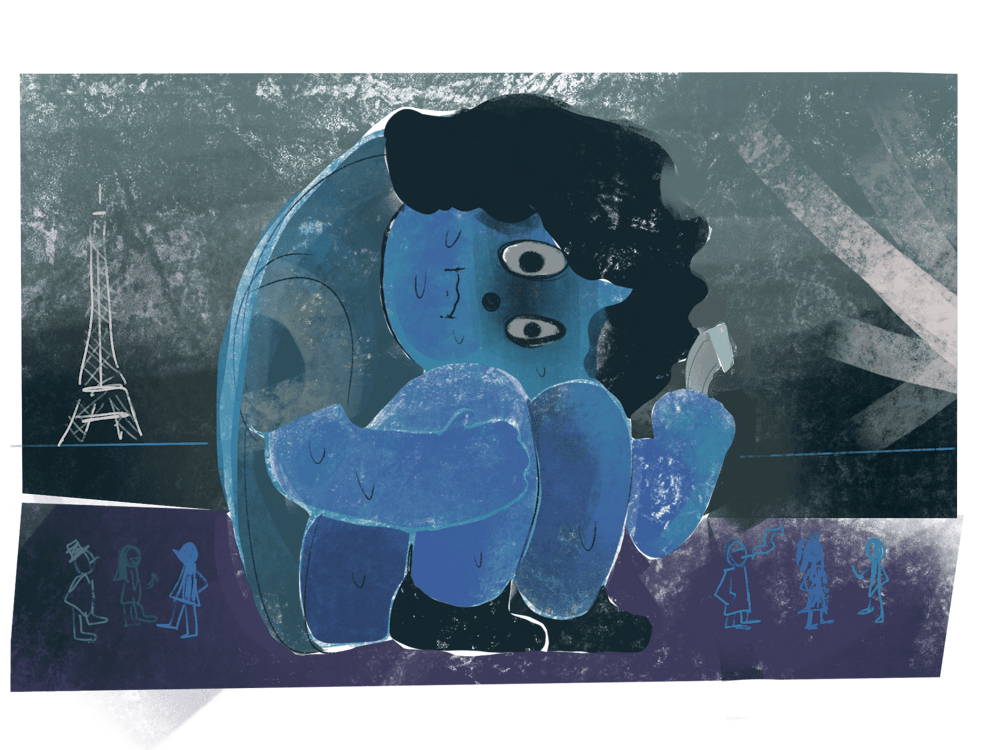
I peel out of bed and squint at the screen. A sheer curtain mutes the afternoon sun. Paris is humid this time of year, so I lie atop the blankets of the bed I made an hour ago between tears. Car horns blare out the window. Doors slam in the hall. Pipes churn from a faucet opened somewhere a few rooms down. I am thousands of miles away from everyone I love.
sure lmao
what singer
K: Her name is Zeyne, the concert is September 7 at the elysee montmartre
K: If you give me your email I can fw the ticket to you
I tap out my home email address and sink back into sleep. K shoots me an email a few minutes later.
*
I don’t know Zeyne, which doesn’t mean much, because I don’t know most musicians. I’ve never been to a concert and my imagination of one is less than positive: a dim room crammed to the brim with drunk young people trying to heft their phones over a sea of heads and other phones. Achy feet. Music that, while certainly better in person, isn’t worth sacrificing the comfort of a room of one’s own and a crackling pair of earbuds.
To make matters worse, this isn’t just any concert, it’s a concert in France. France, where I feel like I don’t know a word of the language despite having studied it since third grade. Where I get so nervous about my blocky accent that I drop my voice until the waitress can’t understand me at all. What if my ticket doesn’t get accepted? What if it’s too dangerous to get back at night? How will I articulate anything?
Nonetheless, I consider going. I do my five minutes of research before flopping into another twelve hours of sleep.
Raised by a family of singers and dancers, pianists and CD collectors, Zeyne sprang onto the Arabic pop scene during the heights of the COVID-19 pandemic. What began as song covers posted to her quarantine Instagram account became celebrated singles and albums all around the world, with her audience consisting mainly of young adults in the Middle Eastern diaspora.
Her family hails from Nablus, Palestine, and she longs for the day when she can see her homeland in full. Many of her songs speak to this longing, to her grief and anger, and to her pride in her heritage amidst the horror of its decimation. One of her biggest songs, “Asli Ana” (my roots) centers this feeling.
شمسي أنا الحرية /
ما بحني راسي لمية /
هبت رياح شرقية /
سجل أنا عربية /
وبعرف أصلي أنا
This chorus translates, in much less rhythmic English, to Freedom is my rising sun / I bow my head to no one / The eastern winds have blown / Record that I am Arab / And I know my roots.
The blue light from my phone starts to sting. I realize I do want to see this mystery artist after all, even if my heart cries out against the thought of fresh air and commotion. Maybe.
*
Twice on the day of the concert, I send and unsend messages to K saying I’m sorry, but I can’t make it.
Exhaustion sours my mouth and shoots through the heels of my feet. I have just come from an immersion weekend in the south of France with my study abroad cohort, the beautiful countryside marred by the fact that I had made no friends, had forgotten to pack an outlet converter, and received my first rejection from a literary agent via email while my roommates gossiped about a regrettable kiss with someone named “Evil Max” one bed over.
I’ll take a couple pictures for K, I decide. I’ll go scout out the venue, snap a view of the opener, then hurry on back out if I don’t like it. I don’t even have to go inside, I tell myself. If the vibes are off, if I have to speak too much French to the ticket-taker, I’ll hop right back onto the metro and be home before dark.
The concert line is easy to spot the moment I reach the right street. Mostly young people, mostly looking like me, dark eyes and hair that doesn’t flatten easily, keffiyehs tied around their skirts or shoulders. An usher hands me a flyer for a jazz festival and I nearly balk, thinking I’m in the wrong place, that I messed it all up, before I calm down enough to realize that it’s an advertisement for two weeks later.
Entry is blessedly wordless. My ticket does work, and the arena I step into is spacious, air conditioned and chilled by artificial fog. I order a cocktail at the bar without being carded—even though drinking’s legal at eighteen here, I’m short, and have been told I have the comportment of a nervous fifteen-year-old. Perhaps it’s the sip of lime-marbled vodka that makes this all feel more exciting. The room is busy but not suffocatingly crowded, and people sit against walls and pillars until the overhead lights dim.
Opening the concert is a Franco-Algerian rapper, Léna, followed by a break where I text K my photos. I’ll stay until the main act, of course. Then I can leave. I don’t really want to leave, but the option’s open, isn’t it? That’s more than I can say about Paris itself.
There’s a pulse of bass, and then we see Zeyne. She kneels on a riser on the left side of the stage, a siren perched atop a rock, faux wind whipping through her hair, four dancers echoing her moves like flames rippling off of her. The lights reach her face, her voice reaches the speakers, and the crowd erupts into cheers.
I’m not a musicologist in the slightest. I can’t describe the songs the way magazines do, as “slick” or “electric,” pop or R&B. I just feel them like the tender burn of alcohol on my tongue, a stinging, exhilarating crackle of energy down my throat.
Occasionally, she brings up a stand mic and sings a calmer ballad. Between numbers, she discusses her grandparents. Sometimes her music is angry, sometimes fond. A litany against bad boyfriends. A prayer for her mother in a time of sickness. She describes memories to us, coaxes us through the Arabic hymns, welcomes us into the strobe lights. That’s where we live for a few hours, in memory. It’s not quite home, and it’s definitely not our home, but it means something. Means home’s still out there, tracing our footprints, waiting for us to come back.
*
After sloughing off my first dehydrated nap on my first day in this brand new city, I texted my mom.
Were you like this in Germany?
Her reply contains the usual questionable text grammar, replete with boomer emojis.
Worst! I had to go to Spain first to wait for German visa. I was in a crappy hotel and I was so scared to leave the room. The bathroom and shower were in the corridor! I didn’t know Spanish and could speak a little English. I think I was there for two months or more. I started getting out more after 2–3 weeks. ??
In Germany, the anxiety got better faster because I signed up for a language class. I think after one month or so.
When I came to US, I lost weight the first time in 6 months?. I became size 4??
Looking back, I know I needed to go through those days to get here.
I think about asking her how she managed it. But I already know: she had no choice. She wasn’t studying abroad to widen her world or escape something inside her she couldn’t name. War and tyranny snapped at her heels. The only way out was through. She was strong, brave. I am not strong and I am not brave.
The summer before my freshman year at Brown was months of eye-rolling and getting fed up with my mother, grating when she interrupted me, even by accident, taking every suggestion as criticism. I chafed against childhood. I tugged at its chains, wrestled and fought, and then I was on campus and the cuffs sprang open and I was hurtling through open air.
I cracked down the middle. Cried night after night. When my mother said goodbye, I apologized to her for being a grouch, for being ungrateful, for rebelling in my feeble little ways, for reading Stephen King behind her back in middle school.
I pleaded, “I’m sorry. I don’t know how to do this without you.”
“I’m right here.” She always dyes her hair with henna. It glimmers red in the sun. “Anywhere in the world, I’m just a call away.”
*
The metro back to my street is peaceful, sparse enough that I can sit comfortably across from other concertgoers, then follow them up the platform’s stairs and onto my street. It barely feels like midnight: people milling in the streets, traffic signals and store signs still glowing over the narrow sidewalks, the crushed cigarettes in the cracks of the road, the shuttered grocery stores. Many bars dot my neighborhood. The occasional terrace is awash in yellow light, spilling chatter out past the awning and the patio fences, French and Arabic and sometimes English and a dozen languages I can’t identify. Clinking glasses, lively tables sweeping me off into my quiet apartment. I cast one look back at where the British tourists hug on the street corner and the bus unloads another crop of passengers into tipsy laughter.
It’s an odd, marvelous thing, my street. I have never seen it like this before. I have always been too scared of the dark.
*
I’d like to offer a neat ending, one where I love Paris now and shudder at the thought of going stateside, one where we can all make peace with new homes and forget about the old ones. As if. But there’s something to be said for this awkward metamorphosis, the uncomfortable shifting under my skin when I make it through the day, through a coffee order, through a ticket stand. The thrill in my chest when I feel a little less lonely, when I can stand in a darkened room and feel music I’ve never heard and barely understand the pulse under my shoes. Like a living thing, the bass, the fog, the Elysée Montmartre. Like a heart soldiering blindly, faithfully on.