Deep beneath California’s Lake Mojave, microscopic fossilized shells reveal the history of lake ecosystems in the American West. These shells provide reasoning for why one microscopic species disappeared 16,000 years ago.
In a new study, Brown researchers examined microfossils called ostracods located in Lake Mojave. These microfossils were used to date the changing hydroclimate and ecosystem of the lake thousands of years ago.
The research revealed that as Lake Mojave’s water contents changed following the last glacial retreat, shifts in water depth and thermal structure, rather than temperature or rainfall, led one type of ostracod — L. bradburyi — to disappear from the lake while another ostracod species — L. ceriotuberosa — remained.
“The species change was so distinctly correlated in time with the geochemical changes we were seeing in the lake,” said Gavin Piccione, co-author and assistant professor at the University of Pittsburgh. The researchers observed a distinct change in the species of ostracod in the lake when fresh water from the Ice Age flowed into and deepened Lake Mojave.
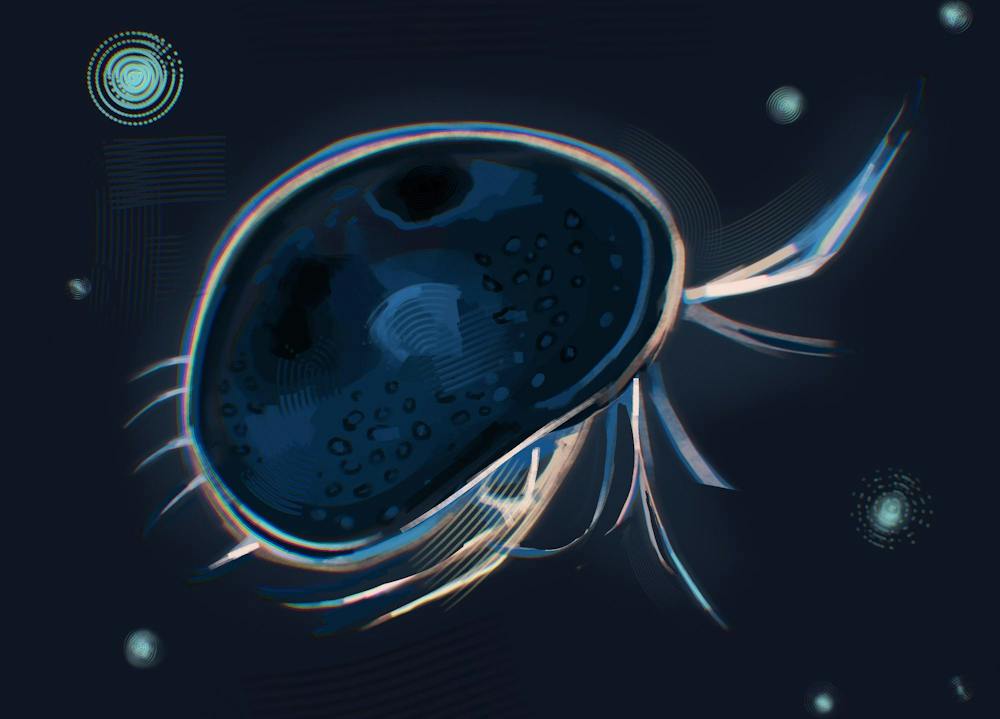
According to first author Anna Dubey ’25, former copy chief at The Herald, ostracods are tiny, millimeter long organisms that produce a calcium carbonate shell. This shell, also referred to as a valve, “contains chemical signatures that reflect environmental conditions at the time the valves were formed,” she said.
Dubey explained that ostracod ecology can uncover clues on past climates, since each ostracod species has a specific tolerance for factors like temperature or salinity.
According to Daniel Ibarra, principal investigator and assistant professor of earth, environmental and planetary sciences, more alkaline lakes contain larger ostracods due to higher carbonate concentrations, which drives ostracod valve development.
The two ostracod species investigated in this study, L. bradburyi and L. ceriotuberosa, no longer co-exist in North American lake environments. According to Piccione, current day L. bradburyi is now found in the high Mexican plateau, and L. ceriotuberosa is found in the western United States and Canada.
Piccione explained that the two criteria for the survival of L. bradburyi are mild winter temperatures and a shallow lake depth. During the peak of the last Ice Age, the climate was cooler and lake basins were shallower, allowing for the coexistence of both species.
As a shift towards wetter conditions sent more water down the Mojave River into the lake, deepening it, the lake began to stratify in the summer, with warm water moving to the top of the lake and colder water settling at the bottom. “All of a sudden, it was no longer habitable for the bradburyi species,” Piccione said.
Ibarra explained that this finding is important “for understanding how water and temperature are changing in the past and potentially in the future in this dry, arid environment.”
James Russell, professor of earth, environmental and planetary sciences, who was not affiliated with the study, emphasized the significance of the study’s investigation into seasonality and how changes in temperature impacts ostracod survival.
“People haven’t really thought about subdividing the temperature structure of a lake into warm and cold, and how that would impact the distribution of these organisms,” Russell said.
According to Dubey, this work can inform projections of migration for similar species in today’s warming world. “With modern-day climate change, the extent to which species will be able to expand their ranges and adapt to changing temperatures is a major question,” she said.
Looking forward, Dubey said she hopes “that this research provides insight into overlooked ecological dynamics and contributes to the study of how species shift their geographic ranges amid climate change both in history and in the present.”