My intention with this article is to continue to raise awareness of the academic integrity issue, mostly connected to — although not restricted to — the uses of artificial intelligence in our education efforts. In doing so, I am reporting back on the latest developments in the cheating case of my spring semester course.
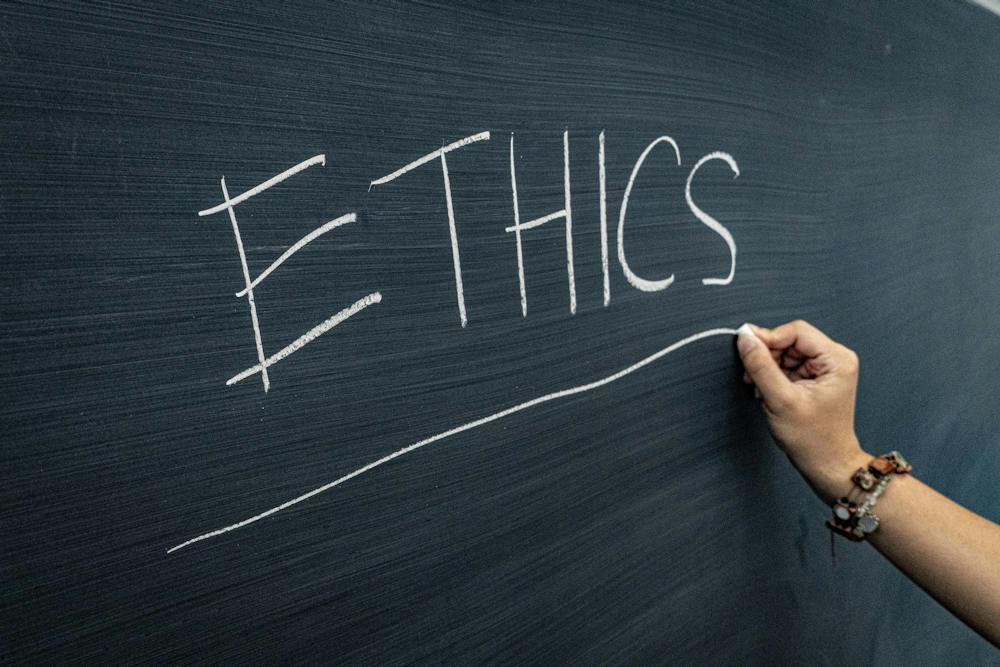
Academic integrity is under attack on multiple campuses, as demonstrated in several recent articles in the press. For example, The Atlantic’s May 12 piece “How AI Killed a 133-Year-Old Princeton Tradition” talks about the Princeton honor code, recently abandoned after massive unauthorized use of AI. “What AI Did to My College Class,” published in the New York Times on May 17, is an account of an immoral culture among Stanford undergraduates, who attend the university not to learn anything, but simply to be part of its plutocracy network. In “There’s Really Only One Way to Stop Students From Cheating,” published August 26 in The New York Times, Adam Grant, an organizational psychologist at the Wharton School, reports shocking statements from his students regarding cheating, and concludes that the only way to remedy such behavior is for professors to start teaching ethics. I enthusiastically second his proposal.
First, I would like to praise The Herald for having published on April 20 an article about the massive cheating incident that took place in the midterm exam of my course, ECON 1170: “Welfare Economics and Social Choice Theory.” The article helped to raise awareness of the serious incident and its implications. It also contained shocking statements from Brown economics students — who seemed intent on finding excuses for cheating — and a very unfortunate quote from the associate dean of the College for the academic code at the time. Let me report briefly the facts of the incident, including most recent developments.
After my suspicion of massive cheating in the midterm, I changed the format of the final exam to be in-person. After that announcement, many students dropped the course, including 22 who had scored a 100 on the midterm. While the class averaged a 96 on the take-home midterm, those who took the final averaged a 48. At this point I announced I was declaring the midterm null and void and reweighing the final appropriately. I had told students right after the midterm that this would happen if the two distributions were not roughly similar. Also at that point, on May 16, I submitted the case to the committee on the academic code. The stark difference between the two exam grade distributions and the choice of many students to drop the course in spite of a stellar midterm performance provided concrete empirical evidence of my first suspicion. I was told by the dean, however, that I would have to submit individual reports for each of the students I suspected of cheating in my class. This would have required an unreasonable amount of work, and seemed to me like an effort to stall the process. After I informed the dean that I would not complete individual reports, I didn’t hear from the committee until June 30, two days after the first article reporting on the University's inaction was published.
The committee dropped the insane requirement that I submit 60 separate reports, and has since made good progress. As of writing this, 48 students have confessed and agreed to the charge of “products not self-produced.” Perhaps one factor to understand the high rate of confessions was my decision of not affecting course grades. In my mind, after I eliminated the midterm, the grades in the course were the correct ones, mostly based on the final exam performance. Each student who has agreed to the charge has been asked by the committee to write a reflective essay about the role of university education. Apart from the understanding that unethical behavior has consequences, this educational experience should be an important step in these students’ learning journey.
Indeed, the high number of confessions gives me hope. When I announced to the class that my recommendation to the committee was not to change the course grades, I also asked them to be honest and respond truthfully to the committee’s questions. I am proud of many of my students, who have followed my advice and helped the committee establish the truth. While they succumbed to the strong temptation offered by the AI tools — a real risk for all of us in evaluating the appropriateness of using this very powerful technology — their truthful declarations, after their moral side was invoked, is a resounding test of their integrity. I see this as a good example to show how the reminders of ethics may be effective in producing better behavior, justifying my general plea in this article.
We all in the Brown community should strive to bring back the value of academic integrity and put it at the forefront of what we do.
For my part, I plan to add an ethics component to my courses. Specifically, in my game theory course this fall, I plan to add an ethics question to the quiz students take at the end of each of my lectures. In it, I will try to contrast the strategic solution to the game provided by game theory with other solutions to the problem, solutions based on altruism or ethical motives. As an economist, perhaps we have overemphasized Adam Smith’s self-interest from “The Wealth of Nations” and under-appreciated the motive of sympathy from “The Theory of Moral Sentiments,” by the same classic author. In a society without sympathy and integrity, trust is eroded, and trust is a pillar of any economic interaction, of any human relationship.
In the article cited above, Adam Grant provides empirical evidence suggesting that reminding people of their moral side improves behavior. To be brief, I will not repeat those here, but I believe this is a powerful argument to bring back ethics to many parts of our curriculum. Perhaps the most compelling point is that if students are confronted with the issue of their morality more often in class, they will be more likely to consider their morals in their academics.
The massive culture of cheating and low standards must stop. I very much hope the case of widespread cheating in my class will help Brown continue deepening the conversation about these issues and ensure the issue of academic ethics stays top of mind. This conversation must involve the University administration, the faculty and, of course, the students. Students are the first ones to understand that the cheating climate is terrible for them, and also terrible for the society where they are supposed to contribute. There is incredible talent in the Brown student body, and that talent will be wasted if it chooses not to take up the hard challenges of learning and critical thinking. The motto “Brown Ever True,” often used by the University administration, is indeed beautiful. Let’s all make it part of our every-day conduct.
Roberto Serrano is the Harrison S. Kravis University Professor of Economics and was the chair of the Economics Department from 2010 to 2014. He can be reached at roberto_serrano@brown.edu. Please send responses to this opinion to letters@browndailyherald.com and other op-eds to opinions@browndailyherald.com.