
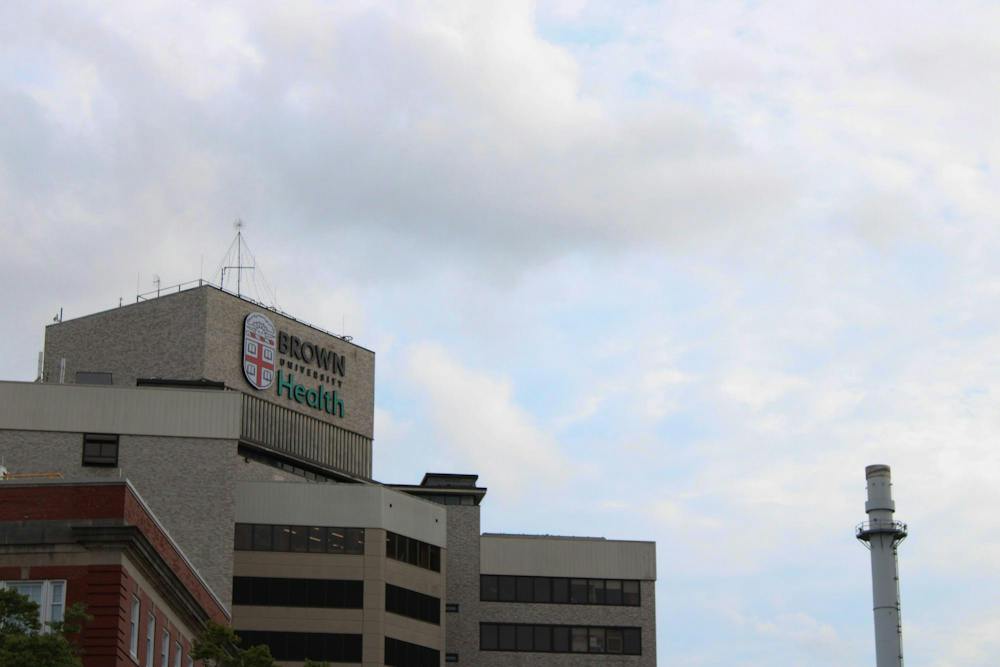
Brown University Health claims that since it holds “patient comfort and well-being” as a priority it “strive(s) to provide safe, compassionate care of the highest quality for all patients.” However, Brown Health’s recent decision to hire Jason Owens as its new vice president of security suggests otherwise.
Owens worked for U.S. Border Patrol, a subset of U.S. Customs and Border Protection, for nearly three decades. Throughout his career he served in various executive positions and ended his tenure as chief. Given CBP’s current and historical mistreatment of migrants at the U.S. border, including reports of detainees being denied food, water and medical care, Owens’ background must be called into question. How can we trust a man whose professional experience consists of decades in an organization that disregards foundational human dignity to protect the dignity and safety of Brown Health’s patients?
To be abundantly clear, I do not intend to argue that there shouldn’t be competent security leadership at Brown Health. Currently, healthcare workers are five times more likely to experience violence than other professionals. Recent events demonstrate that Brown Health is no exception. I was still employed at Brown Health when Rhode Island Hospital nurse, Scott Amaral, was brutally attacked while on duty and remained in a coma for a month. It was horrific and a wakeup call for the organization, that then responded by creating the campaign #ScottStrong, Keep Healthcare Workers Safe, which is still active today. Despite this wakeup call telling us we need better protections for healthcare workers, Jason Owens is not the appropriate choice for the position, regardless of his listed qualifications.
Recent data from a survey conducted by the American Academy of Pediatrics earlier this year indicates that undocumented folks are weighing getting treatment with the risk of detention. The survey found that 40% of pediatricians have noticed families avoiding medical care for concerns about immigration enforcement and another 38% reported being unsure as to whether care was being avoided. Beyond the statistics, an article from NPR shared how an undocumented mother avoided seeking medical care for her asthmatic son out of fear of being detained by U.S. Immigration and Customs Enforcement. When she eventually sought treatment for him, doctors found that a respiratory infection was responsible for the severe asthma attack he was suffering. Thankfully he survived, but the hospital noted that he should have been brought in much sooner. In such medical cases, time is essential to avoid life-threatening complications and invasive treatment.
While they are separate entities, both CBP and ICE fall under the U.S. Department of Homeland Security, and the agencies are easily confused. The two organizations frequently participate in joint operations and, earlier this year, CBP and ICE collaborated on the enforcement operations in Minneapolis that left two people dead. Last year, a patient who had been detained by ICE agents was allegedly denied access to legal counsel after being brought to Rhode Island Hospital for treatment. Now they have hired someone with an extensive background working for CBP. How can our community trust that Owens and Brown Health will advocate for patients in the face of ICE threats? What security protocols might Owens enact that are actually more harmful to our community while intending to keep it “safe?” As more become aware and the public associates Owens with his former employer, this only stands to exacerbate avoidance of the hospital in fear of detention and deportation.
Despite the saliency of these concerns, Brown Health has not provided an adequate response. A spokesperson for Brown Health stated that Owens was “selected for his extensive experience in public safety and security leadership, as well as his background leading large, complex organizations.” The spokesperson then reiterated Brown Health’s commitment to creating a safe and welcoming environment for every person entering all facilities.
Brown Health has continued to ignore concerns voiced by the community it serves. There has been much engagement on social media about Owens’ hiring, including an Instagram post by the Rhode Island chapter of the Party for Socialism and Liberation that has over 6,000 likes and nearly 1,500 reposts. Several other community organizations have signed on to support PSL in their efforts including the Committee of Interns and Residents/Service Employees International Union, Brown Rise Up, Alliance to Mobilize Our Resistance and AFT Local 6516. At an Oct. 2 picket on Rhode Island Hospital campus, Owens’ hiring was highlighted as tone-deaf, considering the ongoing fight to pay resident physicians and fellows a living wage. Brown Health has failed to substantively respond to any of these complaints.
In response to genuine needs for security, Brown Health hired a top official from a national agency that has consistently deprived people of basic human rights. CBP is known to inspire fear in our immigrant communities and discourages patients from seeking care when detention and deportation are at risk. Regardless of his competency in his job, Owens is — by nature of his background — unfit for employment at an institution dedicated to care.
Christopher Botelho ’13 can be reached at botelho.christopher@gmail.com. Please send responses to this op-ed to letters@browndailyherald.com and other opinions to opinions@browndailyherald.com.


