
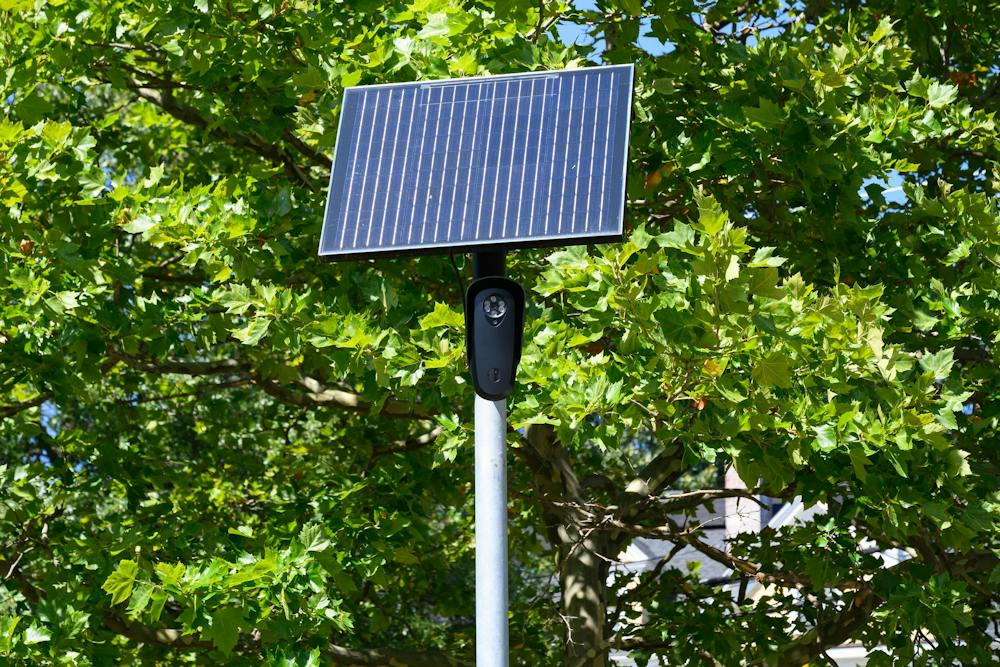
On Oct. 19, Rhode Island Gov. Dan McKee announced that a statewide pause on installations of automated license plate readers such as those made by Flock will continue indefinitely.
While the pause continues, interim regulations created by the Rhode Island State Police will provide guidance to local police departments. These regulations prohibit the use of ALPR data for immigration enforcement, healthcare investigations and more. Data can be stored for a maximum of 30 days, unless law enforcement determines there are valid reasons to preserve it, and cannot be shared with outside agencies without a formal agreement.
The pause is meant to provide time for R.I. lawmakers to draft formal regulations on the use of license plate readers, according to a press release from McKee’s office.
This policy’s implementation comes amid nationwide controversy regarding widespread misuses of data from Flock cameras, including by police officers. At least five R.I. towns have terminated their contracts with Flock, and the Providence City Council has proposed a citywide ban of the cameras.
In Providence, 60 Flock cameras are currently in operation, The Herald previously reported.
“Every day there are new reports of misuse and abuse of Flock,” Providence City Councilor Miguel Sanchez (Ward 6) wrote to The Herald. “Rhode Island should not be a surveillance state.”
A recent report from Rhode Island College students found that between November 2024 and November 2025, over 3.2 million searches for Providence’s Flock data were from cities that don’t have official access to Providence Police Department data.
Flock did not respond to The Herald’s request for comment. ICE also declined to respond to allegations about illegal surveillance using ALPR cameras.
Providence Chief Public Information Officer for Public Safety Kristy dosReis wrote to The Herald that ALPR technology has become “an integral tool in our investigative process, helping investigators develop leads and support criminal investigations.” The PPD will “work within the statewide framework” in using its ALPRs, she said.
“We support appropriate oversight and accountability while recognizing the important role this technology plays in helping investigators solve crimes and protect public safety,” dosReis added.
Gretchen Raffa, chief policy and advocacy officer of Planned Parenthood of Southern New England, expressed “strong concern” that state protections “are easily circumvented” by law enforcement agencies across the country who can access detailed surveillance data about Rhode Island visitors through ALPR systems.
In particular, Raffa noted the privacy risks that ALPRs pose for “immigration enforcement and the criminalization of reproductive and gender-affirming healthcare.” Raffa referenced a case of a Texas sheriff who used Flock cameras to track a woman suspected of having an abortion across state lines.
The interim regulations were developed by the Rhode Island State Police through collaboration with three statewide law enforcement and governmental organizations. But Raffa argued that public input is necessary to regulate surveillance tools that impact privacy.
RISP Lieutenant Colonel Erik Yanyar wrote to The Herald that public input would be gathered during the legislative process.
Representatives for State House Speaker Christopher Blazejewski (D-Providence) and Senate President Valarie Lawson (D-East Providence) wrote to The Herald that neither has reviewed any new proposals for long-term ALPR regulations. They added that R.I. lawmakers will discuss ALPRs and Flock cameras in the 2027 legislative session.


