
Content warning: The content of this article includes descriptions of sexual assault, rape and drugging.
Nearly two years after a former Cornell University student reported being drugged and gang-raped inside a Cornell fraternity house, the case has sparked a national conversation after the student, who is identified as Jane Doe, filed a civil lawsuit against her seven assailants on Sept. 16. Thirteen days later, the District Attorney’s Office in Tompkins County — where Cornell is located — announced they had reopened Doe’s case. Her story — and Cornell’s dismal response to her report — has captured the attention of international news and social media alike.
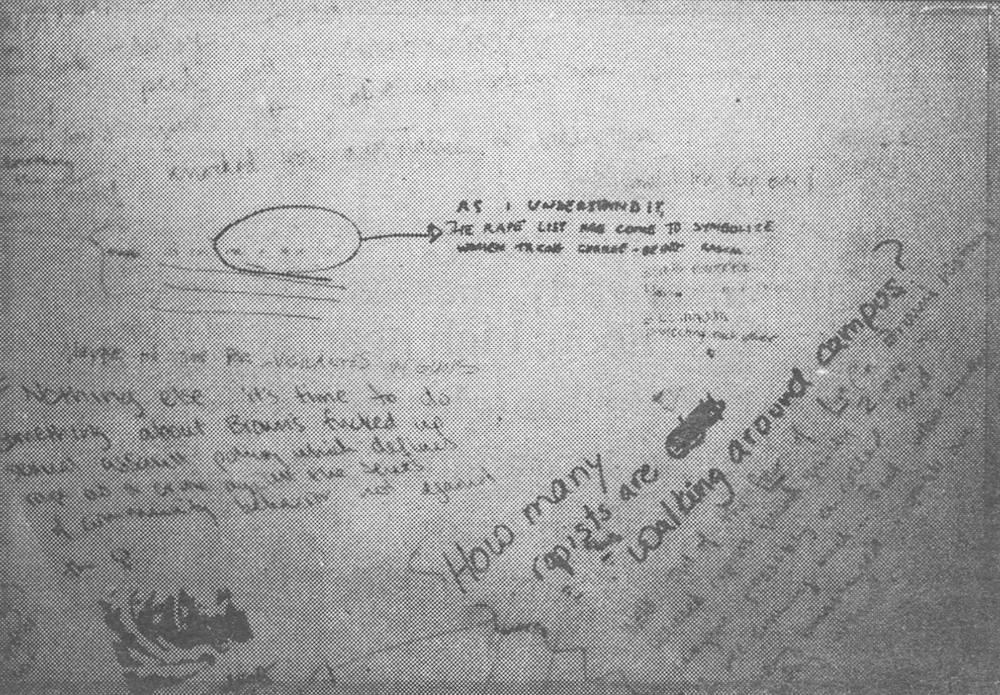
Jane Doe’s voice rings beyond just Ithaca. It echoes a history of women who, initially ignored or underserved by official channels, found power in speaking out elsewhere. In the 1990s, before news could go viral overnight, women at Brown had their own way of making themselves heard: graffiting the names of alleged sexual abusers on the doors of women’s bathroom stalls, first in the John D. Rockefeller Jr. Library. Like Jane Doe, these women’s testimonies had fallen on deaf ears when they brought them to administrators. But with persistence, the list on the bathroom wall became a national story. The women chose to tell their stories on a bathroom wall not out of vindictiveness, but out of desperation and desire to be heard.
While the medium of the conversation has changed, 36 years later the Ivy League can’t seem to shake its indifference to sexual assault. But Brunonians are not powerless.
On Nov. 8, 2024, Doe first reported that she was allegedly gang raped in October of 2024 to Cornell Police. She then took part in police interviews on Nov. 14 and 15. However, the district attorney relied on a six-page signed statement, rather than the full interview, when assessing the case. According to the district attorney, the statement described voluntary drug use and consensual sexual activity, which he cited to explain why the prosecutors didn’t bring charges at the time.
Cornell has denied that Doe’s assailants’ punishment was simply writing an essay. But, no matter how you look at it, the University’s response to Doe’s assault was, in the words of Ithaca Mayor Robert Cantelmo, “appalling.” Only two of the seven perpetrators were expelled, according to the suit, and Cornell did not inform the Ithaca Police Department of the crime.
Thirty-six years ago, Brown’s response to students’ sexual assault allegations was similarly insufficient. The perpetrators’ consequences included writing a “letter of apology” or, in one case, extra laps at football practice prescribed by a coach. At both Brown and Cornell, the female victims were failed by the universities they expected to protect them.
By trying to silence these women, Brown only fueled them. When janitors scrubbed away the graffiti, it was rewritten in indelible ink. When the stalls were painted black, they turned to white and metallic markers. And even when male students started a retaliatory list of “women who need to be raped,” the University did nothing but agonize that the accused men’s rights were violated by having their names on the list.
Less than a month after the graffiti’s first mention in The Herald, the New York Times made it a national story. The graffiti shot to fame and started conversations about date rape and campus assault, from The Phil Donahue Show to news outlets across the country. Just as the Daily Pennsylvanian published an editorial in solidarity with Cornell’s Jane Doe Wednesday, Penn women mimicked the Rock list in their own Van Pelt Library in 1991.
In 2026, we have many more ways to make ourselves heard than scribbling on a bathroom door. On social media, anyone can tell their story without waiting for a newspaper or network to pick it up. In the last several days, many Brunonian women have done just this, empowered by Jane Doe’s example. Each of these alleged assaults happened in different periods of time, but the fact that an unofficial method was effective both times demonstrates the importance of speaking up and out.
At Brown, their tenacity paid off: After their appearance on The Phil Donahue Show, then-President Vartan Gregorian invited several women to come forward with ideas for change. This led the University to, for the first time, include sexual misconduct as a punishable offense in the disciplinary code, provide counseling for parties involved, include sexual assault education in first-year orientation and launch the Safewalk program.
Brown’s 1990 rape list showed what can happen when students are met with resistance from official channels, and the reopening of Cornell’s sexual assault investigation should remind us all of the importance of using your voice even when it feels like your only audience is in a bathroom stall. Brown’s Executive Vice President in 1990, Robert Reichley, called the women speaking out “magic marker terrorists.” But with their markers, these women made an impact.
Jane Doe reminds us that, no matter what an institution says, we should all remember the pen in our back pockets.
Maya Rosenberg '30 can be reached at maya_rosenberg@brown.edu. Please send responses to this column to letters@browndailyherald.com and other opinions to opinions@browndailyherald.edu.


