
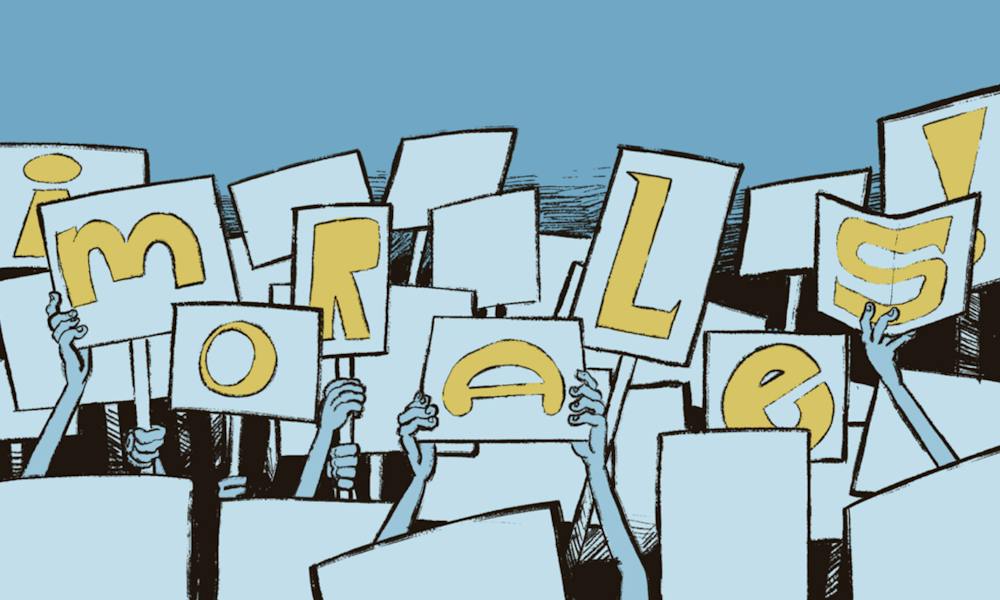
On Sept. 9, then 27-year-old State Rep. David Morales MPA’19 made history by becoming the first challenger in Providence history to unseat an incumbent in the mayoral primary.
He defeated current Mayor Brett Smiley with 52.5% of the vote, despite Smiley’s campaign spending about 7.6 times more than Morales’s during the last couple months before the primary. And the progressive victories that night did not end with Morales. Across Providence, Democratic primaries were dominated by a slate of progressive winners.
To understand this trend, The Herald spoke with professors, activists and candidates about the new wave of further left-leaning politicians who have found success among the Providence electorate.
Embracing bolder policy to address cost of living
Providence’s cost of living has skyrocketed in recent years: In 2025, the city was named the least affordable city for renters in the United States, and over the summer, Gov. Dan McKee declared a state of emergency over high energy prices.
“We’re at a critical juncture,” Annajane Yolken ’11, the Democratic nominee for the City Council’s Ward 13 seat, wrote in an email to The Herald. While “people can see the potential of the city,” they are also unsure whether “they will continue to be able to afford to call it home,” she wrote.
Wage stagnation, rising utility costs and other affordability issues “resonated with a really broad swath of people in Providence,” Rhode Island Working Families Party State Director Anusha Venkataraman ’05 said.
Rent stabilization in particular became a central issue in the Democratic mayoral primary.
In April, the Providence City Council passed an ordinance to cap yearly rent increases at 4%. But Smiley vetoed it the next day, and the council came up one vote short of achieving a supermajority to override that veto.
Morales said he aims to sign rent stabilization into law within his first hundred days in office.
In addition to rent stabilization, progressive candidates addressed a wide range of affordability concerns.
In Ward 5 — which generally has more homeowners than other parts of Providence — Democratic nominee and Program Director at the School of Public Health Jackie Goldman ScM’19 noted that residents are facing “brutal property tax increases.”
“The crisis in the country is accelerating,” Michael Illuzzi, assistant professor of political science at Providence College, told The Herald. “The economy might be doing okay, but for a lot of people, they can’t actually afford to live,” he added.
For the past ten years, voters have increasingly felt that “things aren’t working,” Illuzzi said. He added that over the last two years, he’s observed a shift toward candidates “who are going to push back on the established parties, who are going to say things and do things that would have been risky in the past.”
To Goldman, who will become the first openly transgender elected official in Rhode Island if they win the general election, “the people of Providence are really ready for change, and are ready for an agenda that focuses on them.”
A similar pattern has played out in races across the country. Some analysts have drawn comparisons between Morales’s win and Zohran Mamdani’s 2025 mayoral campaign in New York City. Races in Michigan, Florida and Minnesota have also seen progressive candidates succeed in hotly contested Democratic primaries.
“We’re up against entrenched money, corporate real estate, folks that have resources and are going to do everything they can to hold on to power,” Venkataraman told The Herald.
Seeing similar candidates across the country achieve victory “propelled us forward” and encouraged progressives to “work towards what we saw was possible,” Venkataraman added.
Progressive candidates’ collaboration across campaigns
Throughout their campaigns, progressive candidates in races across Providence worked together to achieve victory.
Venkataraman described Morales’s mayoral campaign as an “umbrella campaign” for a number of candidates who ran on similar priorities and focused on affordability issues.
During his mayoral watch party, many progressive Democratic city council primary winners, including Yolken, Goldman and Miguel Youngs — the Democratic nominee for Ward 1 — celebrated together and gave speeches.
Leading the push were advocacy groups like Reclaim Rhode Island, a housing justice organization which organized rotating canvasses for progressive candidates, and the RIWFP, which endorsed a slate of progressive Providence city council candidates — all of whom won their primaries.
“I feel like I was part of a movement with all of them, and a sort of high tide lifted all ships,” Youngs told The Herald.
Much of the teamwork also occurred behind the scenes, with candidates also supporting one another by preparing each other for debates and policy conversations, Goldman said. Some candidates publicly cross-endorsed one another and even shared volunteers.
“It’s rare to have candidates that are more focused on the mission than their individual candidacy,” Yulyana Torres, the Democratic nominee for Ward 3, wrote to The Herald.
While canvassing for their own campaign in Ward 5, Goldman and their team would also speak to voters about Morales and advocate for his campaign.
“We were really able to do something unique in our corner of Providence” by reinforcing “progressive politics up and down multiple tickets,” Goldman said.
At one point, Yolken had more volunteers than she needed, so her Ward 13 volunteers canvassed in different districts.
Meanwhile, Torres noted that her campaign team canvassed with Morales and Meghan Kallman, the Democratic nominee for State Senate District 15.
“There was really a collaborative spirit,” Yolken wrote. “I think that kind of coordination helped create a sense that we were part of something larger than any individual campaign.”
Youngs chose not to cross-endorse Morales to avoid alienating Smiley voters, but still worked with him on the back end, sharing voter data and volunteer resources.
“The more that we can work together, amplify each other and focus on a people-centered agenda, the more we can have success,” Goldman said.
The coalition behind the campaign
These candidates’ shared vision for a more affordable Providence brought together a “historic coalition” of organizations which have not always worked together in the past, Venkataraman said.
“There is a broad cross section of people in Providence that want and deserve better leadership in City Hall,” who “were willing to put in the work to make it happen,” she added.
Besides Reclaim R.I. and the RIWFP, healthcare workers’ union SEIU 1199, the Providence Teachers’ Union, and Brown graduate student union GLO AFT 6516 all endorsed the majority of this slate of candidates.
“This wasn’t something that happened overnight,” Yolken wrote. “There has been a lot of organizing and relationship-building in Providence over many years, and that created a strong network” of collaborators.
Youngs pointed to the dedication of his volunteers — who showed up for him, even in the summer heat and in the rain — as another key factor in his success.
The incumbent Ward 1 city councilor, John Goncalves ’13 MA’15, spent almost seven times as much as Youngs. “I knew I was going to be outspent by an order of seven or eight,” Youngs said.
“I knew that I needed people,” Youngs said. “I knew that nobody was working harder than us.”
“I feel like this election was such a message that you can’t just buy your way into a seat,” he added.
Rhode Island Democratic Socialists of America did not endorse DSA member Morales or any candidates in the Democratic city council primaries.
“It’s as necessary as ever to build a party for the working class, which is why Rhode Island DSA only runs candidates independently of the two corporate parties,” RIDSA spokesperson Daniel Crowell ’17 wrote in an email to The Herald.
“To make the promise of change a reality, working-class people must unite to fight the capitalists and landlords in the months ahead,” he added. “Rhode Island DSA believes this moment will be more important than any politician.”
Intentional messaging focus on affordability
The wins in Providence were also the result of progressives’ successful political messaging, Brian Krueger, a professor of political science at the University of Rhode Island explained.
“A lot of progressive campaigns were centered on a real acknowledgment of people’s experiences but also hope, opportunity and a vision for what the city could be,” Yolken wrote.
Those who voted for these candidates are not necessarily turning to “a new broad ideological left per se, but they are especially open to progressive policies on bread-and-butter issues,” Krueger wrote in an email to The Herald.
Meanwhile, in the mayoral race, Krueger noted that “Smiley tried to remind voters about the less popular elements” in Morales’s earlier campaign for state representative, such as his previous calls to defund the police. “But these did not gain traction” with voters.
The Providence government moving forward
If Morales and the Democratic city council nominees win their general election races on Nov. 3, Providence government could undergo some significant changes.
“With our incoming group of legislators, I think a lot is going to become feasible,” Torres wrote. “While we all have our individual priorities, we are united on bringing progressive solutions to the most pressing issues facing our city: housing, schools, protections for our immigrant neighbors and the environment.”
“Now is when the rubber hits the road,” Venkataraman said. “Winning alone is not enough. You need to be able to use that power” to enact policies “that will have a real impact on people’s lives.”
Venkataraman added that the RIWFP plans to assist Morales in a possible mayoral transition.
Youngs — who is running unopposed in the Ward 1 general election — added that he is “really excited to be part of a council that has, from what I can tell, a majority of like-minded people.”
In cases like the rent stabilization ordinance, the council used to aim for a supermajority of ten votes in order to override a veto. Now, given Morales’s shared progressive values, the council may only need a simple majority to get certain things done, Youngs said.
“The mayor and the council, as the executive and legislative branch, have a very natural tension based on the balance of powers,” he added. “But that tension doesn’t need to be conflict all the time.”
“When you’re designing legislation, when you’re designing policy, to be able to do so with the understanding that you are working with an administration that shares your vision — that changes the whole calculus.”
Talia Katz is a senior staff writer covering city hall and crime.


