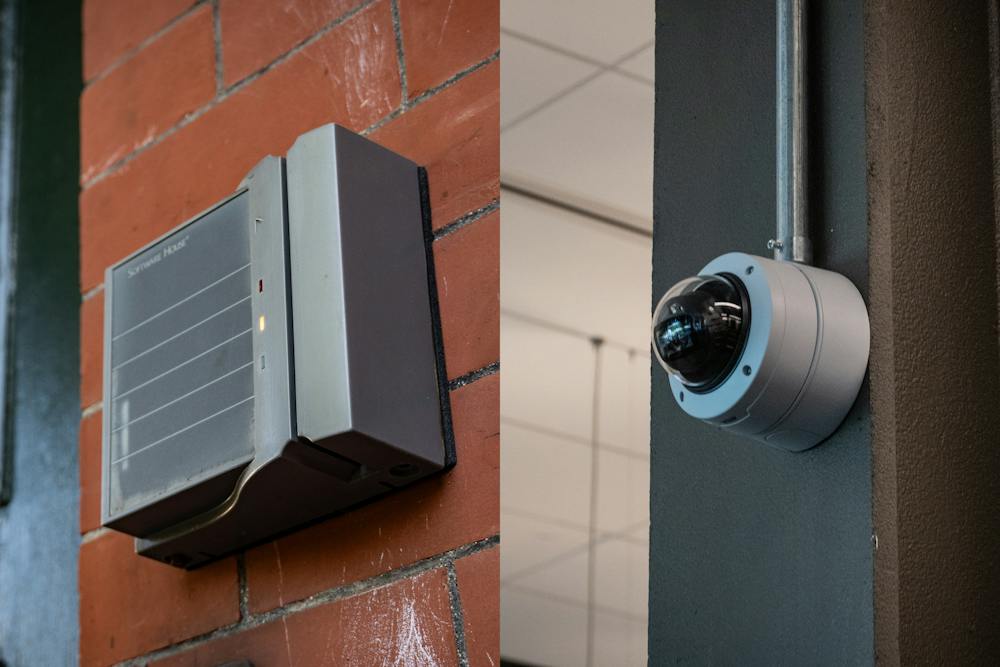
Brown shared policies for restricted building access and outlined its plans for a campus lighting assessment to increase students’ feelings of safety and security in a Sept. 2 Today@Brown message. The announcement follows a wave of changes to campus security this past spring, including increased public safety staffing and requiring card access for most University buildings.
Since the shooting, Brown has closed many of its buildings to the public. But the University is now considering an expansion of its Alumni Card program in which Brown alums may obtain access to University libraries for a one-time fee. Brown’s approach to that expansion will be determined by October.
In the Department of Public Safety and Emergency Management’s 2025-26 community survey on campus safety, lighting was rated the second most important measure influencing community members’ sense of safety. In response to these results, the University will undertake a review of campus lighting to determine where to invest in upgrades.
According to Brown’s Safety and Security Action Plan, which was released on Aug. 28, the University added 700 additional security cameras to buildings and expanded the number of panic buttons across campus. Brown has also directed its public safety oversight responsibilities to its University-wide Safety and Security Steering Committee, established in July. The committee had its first meeting in August, according to the action plan.
“Oversight of safety and security, which previously resided with multiple departments, has now shifted to this senior leadership committee,” according to University spokesperson Brian Clark. The new committee retains authority “to oversee and enforce the University’s approach to physical security and associated safety and security standards,” he added.
According to the action plan, the University is currently assessing whether it will require its officers to use body-worn cameras. The assessment will be conducted this fall and completed by May. The plan also notes that the University plans to continue providing hostile intruder training for the campus community. It is also in conversations with city officials about joining Providence’s Real Time Crime Center.
The University will also commission external safety and security reviews every three to four years, beginning no later than the 2028-29 academic year.
The Dec. 13 shooting is “obviously never going to be forgotten,” Pragathi Nagappa ’29 said. “It’s always going to be a part of Brown’s history and something that the administration has learned from in regards to security.”
For many students returning to campus or arriving for the first time, security changes have changed their campus experience.
William Thomas ’28 said that this increased surveillance “hinders Brown’s identity as an open campus.”
“I remember there were times where you were on the green enjoying the good weather, and on all four corners of the green there is a security person,” he said.
But “it’s not the job of an institution to solve nationwide policy failures,” Thomas added.
Coming into Brown, Anya Kleinman ’30 said that she knew that the open campus “has been for a long time central to Brown’s campus culture.” She noted that any school that has an open campus always has “an underlying security risk.”
Solomon Jackson ’29, who was in Barus and Holley during the shooting, said the new measures did not necessarily make him feel any safer. He said that campus safety feels the same before and after Dec. 13 because gun violence is a threat anywhere in the United States.
“The issue of a school shooting in the United States is a much bigger issue than any individual establishment’s handling of it,” Jackson said.