
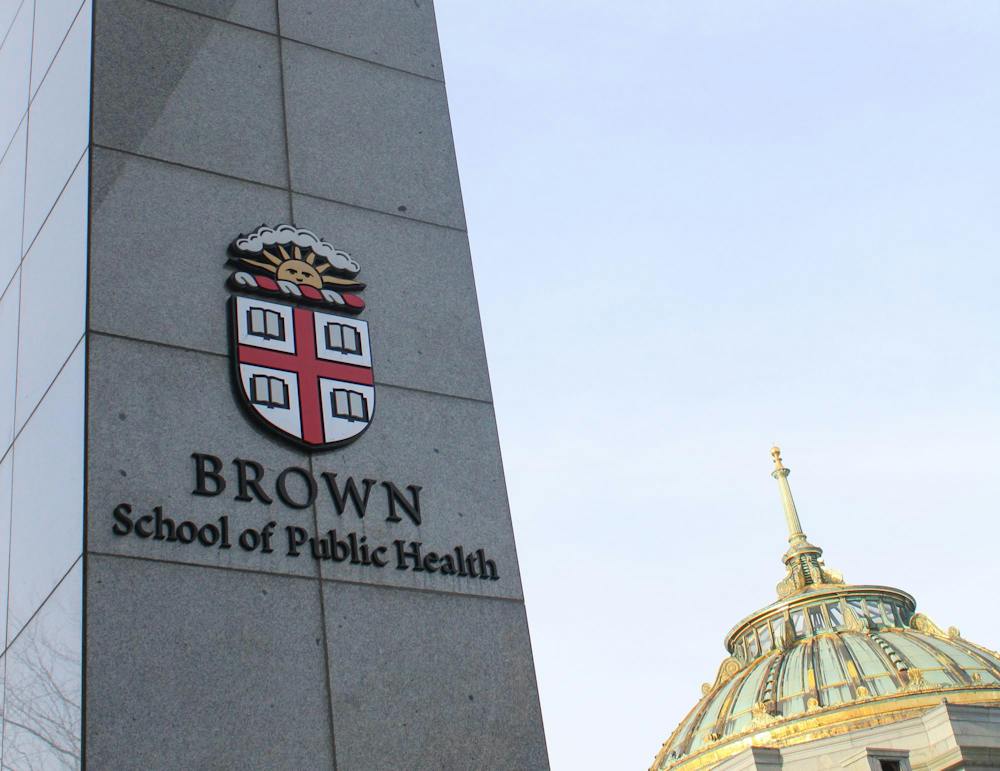
In at least one doctoral program, School of Public Health officials have changed certain graduate students from their classification as fellows to research assistants, adding a new layer of complexity to graduate fellows’ historic bid to unionize.
The doctoral program in behavioral and social health sciences previously designated many first-year students as fellows — a nonunionized class that does not have access to the same grievance processes that unionized graduate employees have. Under current University policy, fellows are not considered employees, since the University views their funding as not contingent on their working for Brown. As a result, they are not covered by GLO’s main contract.
But the SPH officials determined that their fellows had similar work requirements to other students in the BSHS program — including research assistants — who are included in the Graduate Labor Organization’s contract, BHSS program director Kate Carey said.
According to Carey, the SPH program directors met with an administrator during summer 2025 and determined they would move away from classifying students in the program as fellows because they are required to work up to 20 hours per week with their advisors. That meeting took place before fellows announced their unionization drive under GLO.
“Once we learned that to use the term ‘fellowship’ meant it was a non-work appointment,” she added, “we realized all our appointments had work requirements … and we just stopped using the term ‘fellow.’”
This academic year, all students in the BSHS program will be designated as research assistants by default. Many first-year doctoral students across academic programs are classified as fellows.
The development comes as graduate fellows attempt to unionize, an endeavor that would be a first at any private university in the United States. Brown declined to voluntarily recognize the unionization in April, arguing that fellows do not complete work in exchange for compensation from Brown. This decision came after more than 70% of fellows indicated they wished to join GLO in March.
In an email to The Herald, University spokesperson Brian Clark wrote, “Most graduate students at Brown are eligible for inclusion in the union at some points during the period in which they complete their degree (when they are required to perform services) and are not eligible at other points (when they are not required to do so).”
The Graduate School’s guidance to the SPH was meant to “clarify the right way to classify appointments held by some graduate students based on their roles at specific points during the period they complete their degrees,” Brian added.
Michael Ziegler GS, the president of GLO’s parent organization RIFT-AFT Local 6516, argued that the move affirmed GLO’s position that fellows are required to perform the same work as non-fellows.
“The expectations of those people are not changing, and their appointment is,” Ziegler said, “which to me is a tacit acknowledgement that there are fellows who have been performing research services in return for their stipend and other benefits.”
While fellows are not included in GLO’s main contract, a side agreement stipulates they are required to receive the same compensatory benefits as other graduate students. If a graduate student’s outside funding is less than the University’s doctoral stipend for non-fellows, Brown makes up the difference.
Galya Walt GS, a third-year doctoral student in the BSHS program and public health steward for GLO, said her work requirements did not significantly change when she moved from a fellowship to a research assistantship.
“In terms of work expectations, it was all the same,” Walt said. “People are very often changing between fellowship and (research assistantship) and (teaching assistantship), and it’s very ‘semester-by-semester,’ and sometimes people don’t even know that their designation has changed.”

James Libresco is a senior staff writer covering staff & student labor. He is a sophomore from Alexandria, Va. studying political science and contemplative studies. In his free time, he can be found playing basketball, meditating, or losing in Among Us.


