
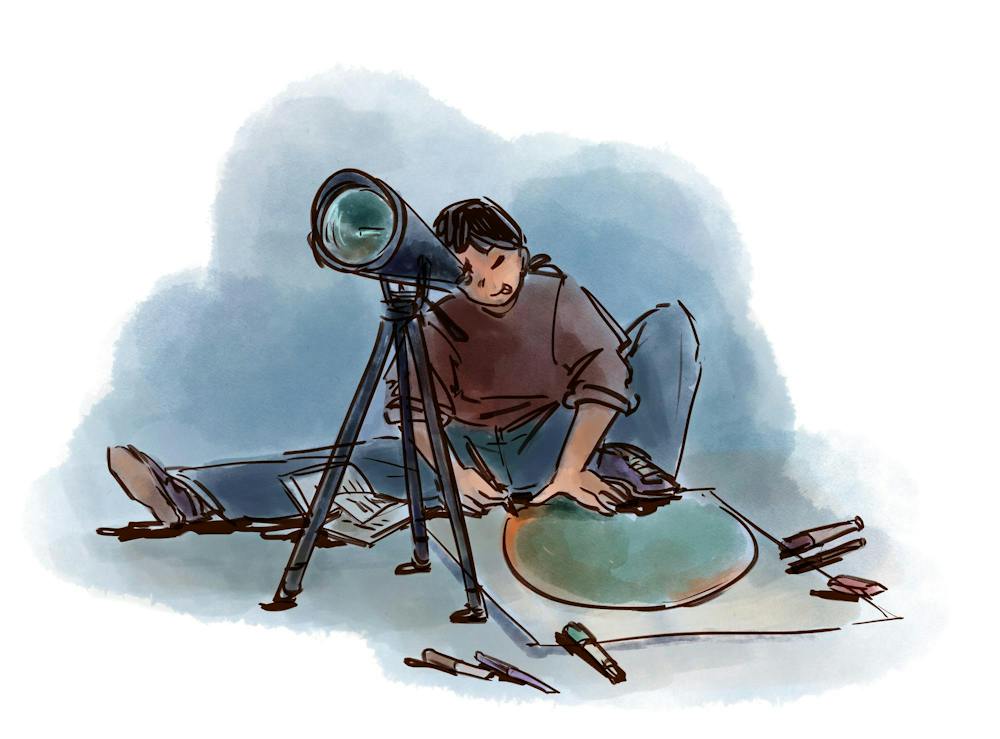
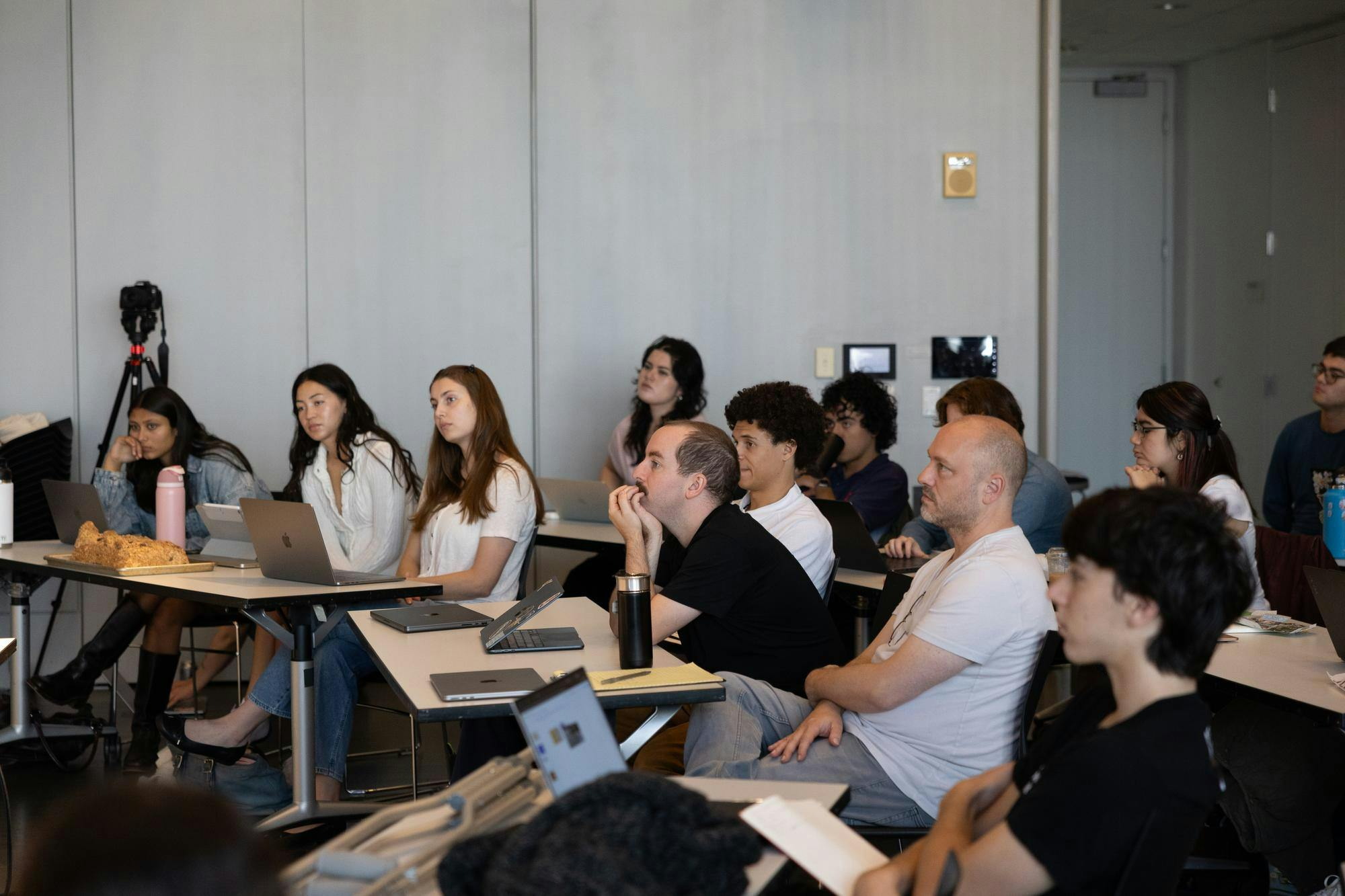
Last Wednesday, the students of EEPS 0080: “Art in Flight: The Creative Exploration of Titan” gathered in the Granoff Center for the Creative Arts to present their class projects. But these presentations were not the slide shows and posters typical to STEM concentrations — instead, students showcased products ranging from a virtual-reality simulation to an animated video with live musical accompaniment. One group of students even brought a cake designed to look like the surface of Titan, Saturn’s largest moon.
Launched this semester, the course is taught by Sam Birch, an assistant professor of Earth, environmental and planetary sciences, and DJ Potter, a senior technical supervisor at the Brown Arts Institute. Birch, who has studied Titan for over a decade, is a collaborator on NASA’s upcoming Dragonfly mission, which plans to send a nuclear-powered rotorcraft to explore Titan’s surface and search for signs of life.
EEPS 0080 meets for three hours once a week. The course is divided into five sections centering around Titan and the Dragonfly mission. Birch begins each of these modules with a lecture, after which students develop their projects.
Potter, who has a background in theatre, told The Herald that he has always been fascinated by space exploration. After becoming curious whether the Dragonfly probe would carry microphones to record sounds on Titan, he contacted Birch “out of the blue” and the two met over coffee.
“(Potter) really opened up my eyes (to) how we share science,” Birch said. Their conversation inspired Birch to “take advantage of this moment to reach as many people as possible and get them engaged with why we explore (and) why this matters.”
Since then, Potter and Birch have worked to tell the story of the Dragonfly mission through art. The project initially facilitated conversations between artists and the scientists working on the Dragonfly mission, but this effort “stagnated” because Birch and Potter couldn’t compensate the artists.
It was then that the pair realised they could continue the project through a class combining planetary science with art.
Birch hopes that by blending the disciplines, the course will emphasise the non-linear and “messy” process of scientific research. The science of Titan and Dragonfly is designed to be a starting point, and students are encouraged to abstract from it in their exploration.
“Don’t let reality get in the way,” he added.
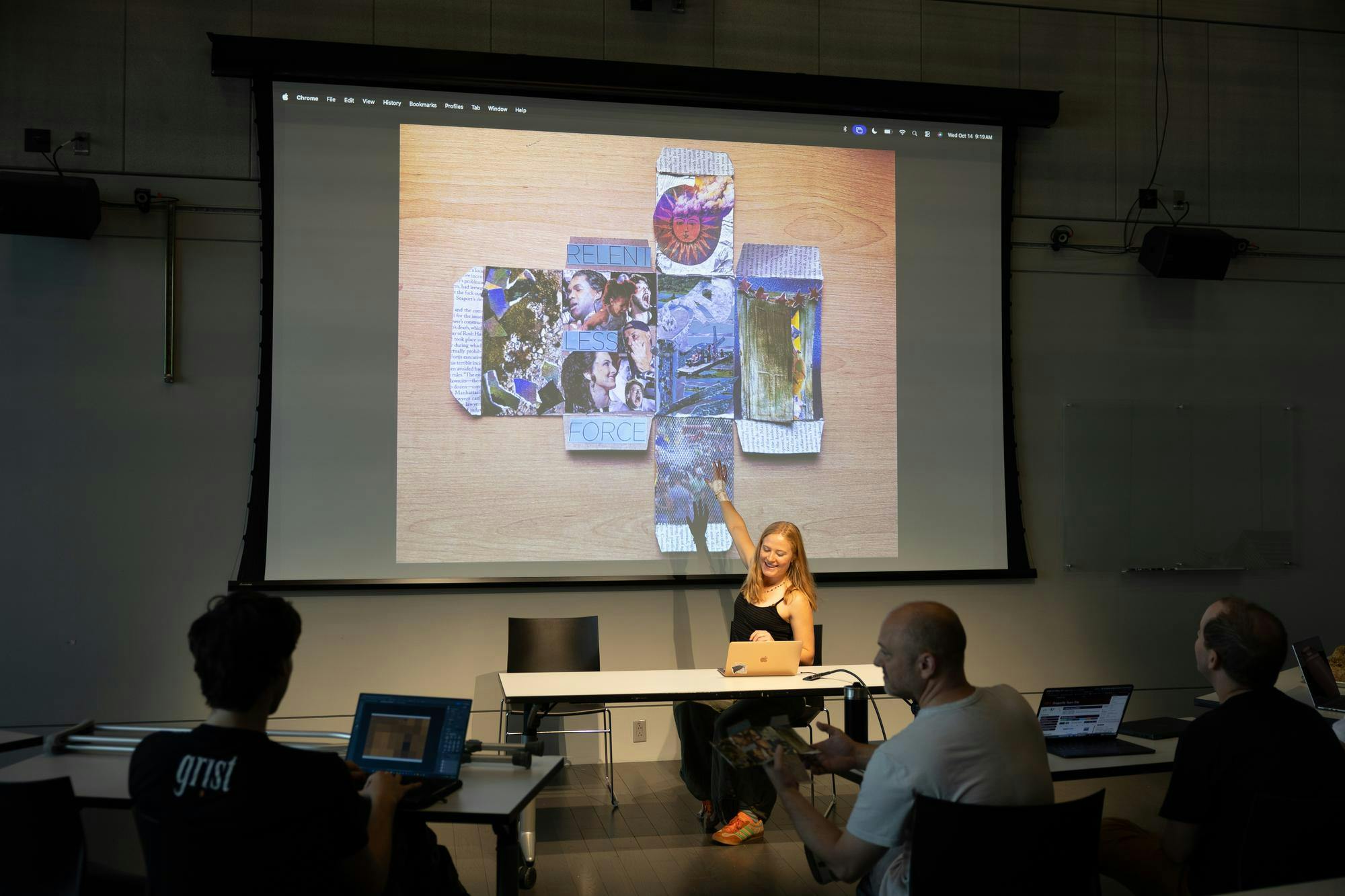
Annabelle Stableford ’28 said that she appreciates being able to access source material from NASA and having “total free reign” to create. Last Wednesday, she presented a collage inspired by conversations she’s had with scientists working on the Dragonfly mission.
“One of the biggest takeaways I’ve had is that stories really matter,” she added. “(This is) an art-science collaboration that draws meaning and brings people into this mission.”
Meanwhile, Sam Marcus ’28 and Marika Solomon Marcy ’29 are working on a documentary featuring interviews with scientists from institutions like the Johns Hopkins University Applied Physics Laboratory. Instead of starting a new project for each three-week section, they have opted to create one that spans the entire semester.
Marcus — an independent concentrator in digital storytelling and impact — is interested in how complex knowledge can be communicated in ways that “connect emotionally,” he said.
“It’s been really impactful for me to see how passionate (the scientists) are about what they’re doing,” Solomon Marcy added. “I see a lot of their curiosity and I see it reflected in myself.”
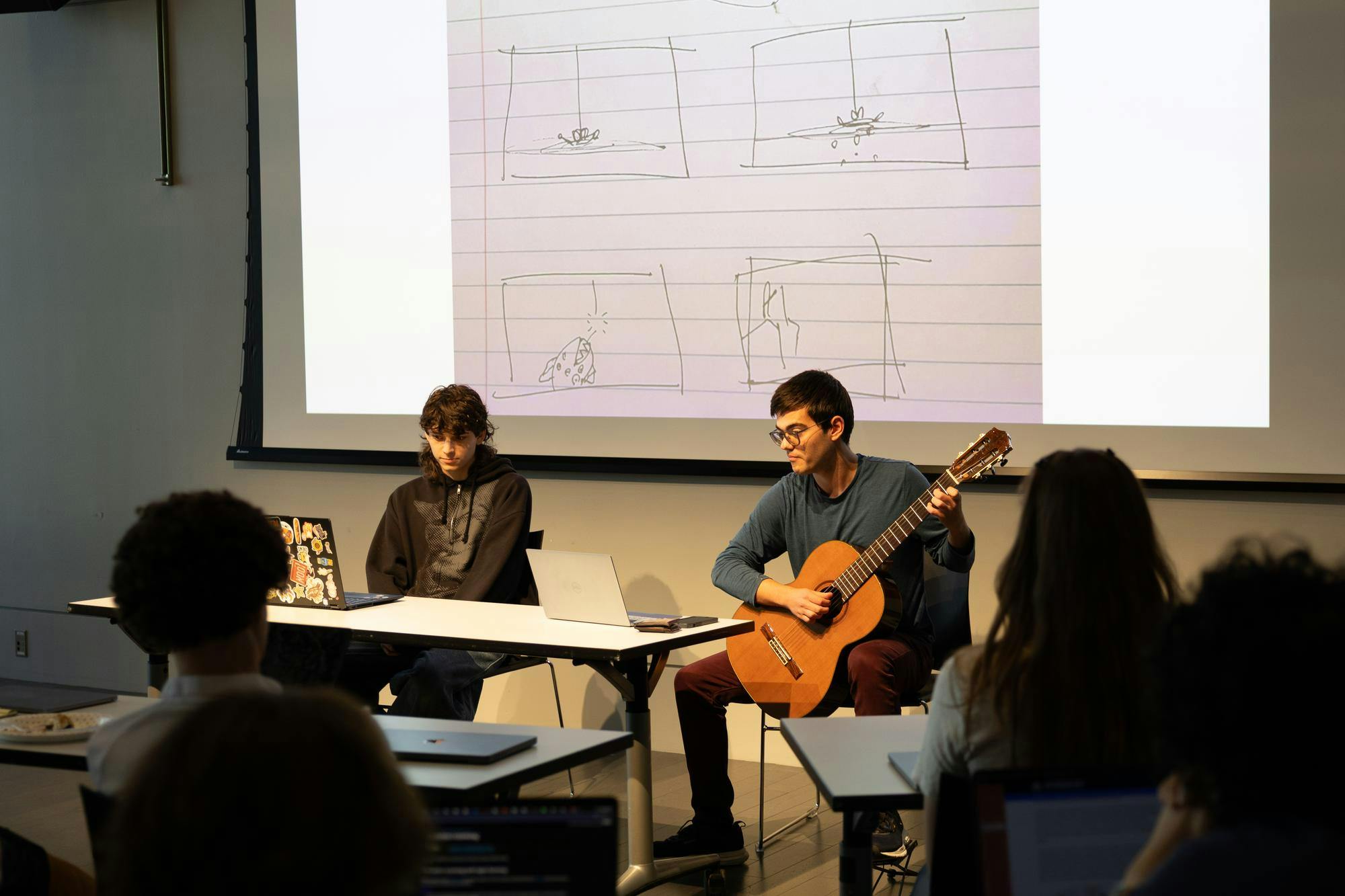
Max Cairo ’27 brought his guitar to class on Wednesday to perform the soundtrack for an animation he is working on with Elly Hempstead ’28.
“I’ve never animated anything before,” Hempstead said during their presentation, adding that while one of their favorite aspects of the course is the encouragement to try new things, “it’s definitely been a learning curve.”
Birch emphasized the value of Titan as the focal point for this course because of its similarities to Earth. Like Earth, Titan has rivers, lakes and rain, Birch explained. This means that Earth’s landscapes give students a familiar starting point for imagining what Titan looks like.
Birch hopes the class will emphasize the importance of space exploration and the “hope” it brings. Particularly at a time when the world feels “cynical,” it is more important than ever for people to work together to accomplish things that are “audacious and insane.”
“I think it’s really, really important that we show that you can explore,” he added. “It’s just something we’re missing now.”
“Let’s just go out and be kids again and explore,” he said.


