While some endure a grueling decade of school in their attempt to become a healthcare professional, others may opt for the slightly more accessible (yet just as intense) alternative route: Roblox. Ever since the platform’s founding and viral popularity during the peak of Covid isolation, bored adolescents and obnoxious preteens alike have flexed their medical acumen in games such as Maple Hospital, Charisma Hospital, Crossline Hospital, and more. In the majority of these games, players roleplay as doctors while engaging in various mini-games and addressing unexpected medical emergencies (the latter of which are often timed) from a rotating list of animated patients. Yet as with most things on the internet, what started off as a relatively simple and straightforward concept ultimately branched off into a multitude of even stranger subsections—including the recent virality of Animal Hospital.
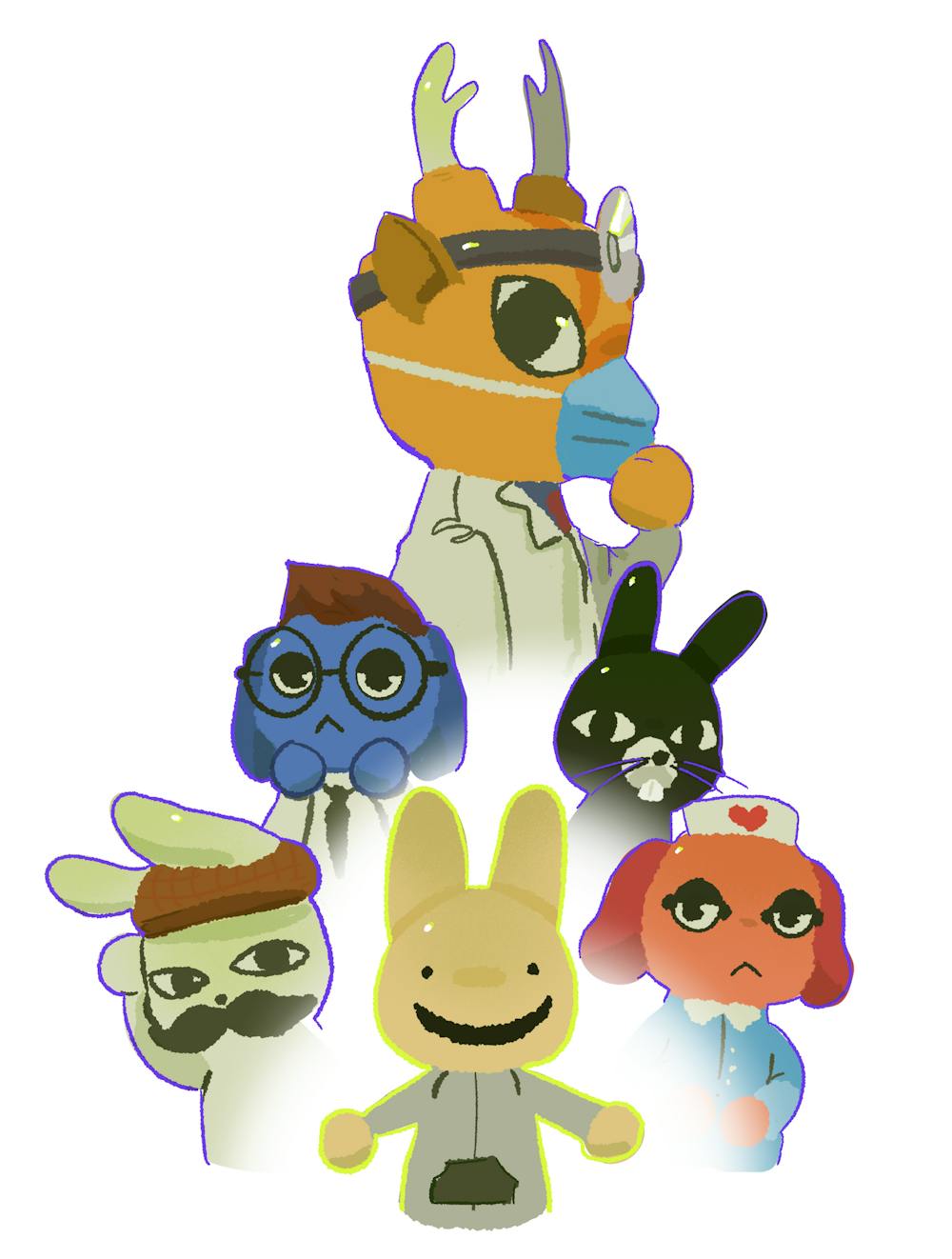
For those who have yet to get sucked into the children’s game like I (a twenty-year-old) have, here’s the setup: You wake up as a pink or tan bunny in a hospital waiting room, and after a few on-screen instructions, you begin your job as a hospital staff member by checking in an assortment of neon-colored animals into the clinic. After taking their pictures and printing their name tags, you’re instructed to follow the influx of feline, cervine, and canine patients to their hospital rooms, where you can then check their diagnoses and administer the appropriate meds with a few simple keystrokes.
But what might seem like a simple narrative concept is soon complicated by a strange, deadly, and rapidly spreading disease throughout the online animal kingdom. Infected animals—referred to as “anomalies”—start trying to sneak past your check-in desk. Thankfully, you can catch them by noticing slightly “off” elements in their design or gait, but if or when they succeed, both you and your regular patients are in for quite the jumpscare: satanic rituals, impromptu cannibalism, stalkers, slime monsters, and more (so pretty much just the usual happenings of the SciLi basement on a Thursday night).
Due to its endearing blend of snuggly graphics and deadly trespassers (don’t worry, there’s a taser if worst comes to worst), the game became a staple at summer sleepovers with my friends. It was both high-stress, yet mindless; high-stakes, yet meaningless. It was the perfect thing to occupy both our minds and computer screens as we challenged the bounds of sleep deprivation before fall.
While the first few shifts are relatively mundane, the game’s intricate lore will certainly keep you from logging off. As time goes by—and as more “anomalies” make their way into your clinic—you start to gain classified information regarding the hospital’s troubled past. While the doctor (a deer who pretty much just leaves you to your own devices) is locked away in his office, patients begin to whisper and confide in you about a string of mysterious disappearances, the origin of this strange new disease, and the corrupt corporation that controls the city.
When you look past the grainy animation and absurd characters, the game actually raises an interesting and topical question about corruption within the healthcare industry (albeit in a highly satirized, potentially unintentional way given its Roblox medium). In addition to the immensely concerning new disease, the animal hospital also faces a variety of administrative and social issues that are eerily reminiscent of modern healthcare debates—including a lack of transparency (the deer doctor typically hides himself in his office and refuses to tell you why), undue influence from a larger corporation (you eventually find out about the internal politics of the clinic and how the aptly-named “The Corporation” is controlling it), and emergency room overcrowding and congestion (sometimes there are so many animal patients at once that you can’t reach others in time or even admit them from the waiting room to begin with). After participating in more and more shifts and engaging in intermittent waiting room conversations, you slowly gain the trust of the hospital regulars—including recurring characters such as Ratthew (a small black rat that first appears between shifts 2–6), “Ron from Accounting” (a blue bunny that sports a briefcase and a dreadfully bright red toupee), and Liz (a caracal who used to work for “Animal News”).
Maybe it’s just the extensive hours I’ve spent on course readings this week, but the gradual development and dissemination of the game’s lore almost mimics the typical structure of anthropological fieldwork. By accompanying the characters throughout their appointments, immersing yourself in their community, and slowly building enough trust throughout shifts to have meaningful conversations with them (sometimes you’ll talk about your lives while going about your routine practices), you’re conducting a sort of participant observation—a term used in the anthropological sphere when researchers engage and participate in activities with the people they are studying. Similar to a lot of well-done anthropological research, the fieldwork-reminiscent practices of Animal Hospital also reveal deeper, more complex accounts of individuals’ (in this case the animal characters) lives and interactions in the public sphere. In the context of the game, it reveals the corruption within the hospital through patients’ personal accounts of their family histories, their interactions with other healthcare professionals (i.e. the aforementioned deer doctor), and their feelings of being silenced by “The Corporation” and its harmful control.
There’s obviously a lot wrong with my comparison between the lore of Animal Hospital and anthropological fieldwork—including my overly simplified definition of the research practice, the complications associated with the player being in a position of power (you’re one of the hospital staff members, so it would be impossible to be a neutral observer), and, not to mention, the fact that this is a children’s computer game about infected bunnies and a furtive deer doctor. Still, I think there are some interesting similarities between the way the game gradually disseminates its lore and the often lengthy, personal nature of fieldwork. In any case, it’s certainly an intriguing way for a game to gradually reveal a story—especially one that follows deep-rooted corruption and inequities that are concerningly reminiscent of actual problems in the human healthcare sector.
So whether you’re a budding anthropologist or simply a bored gamer with a few hours between classes, I urge you to download this strange, yet addictive game. At least you’ve got a new slumber party activity—one that might even convince you to mull over your class readings for a bit.

Ann Gray Golpira is a Section Editor covering Arts & Culture. She is from Norfolk, Virginia and plans on concentrating in both International and Public Affairs and Anthropology. Outside of The Herald, you can find her writing, recording and producing her original music.


