
Brown has a unique reputation in the landscape of American higher education for its openness and collaborative spirit. Perhaps that’s why we should be surprised that our University received a “D” grade in the Foundation for Individual Rights and Expression’s 2026 free speech rankings.
While free speech has become a hot-button topic for political debate, a possible mitigant to this issue at Brown could be as simple as reimagining orientation and co-curricular activities.
Before coming to Brown, I spent two years at a boarding school in Italy with students from 90 countries. My peers and I, given our differences in nationality and background, often ended up in political discussions outside of class, over dinner or in each other’s rooms on subjects as varied as global conflicts, immigration and colonialism. We rarely landed on the same conclusion, and more than once a conversation ended with us agreeing to disagree simply because our experiences shaped us differently. I wasn’t always convinced by my friends’ arguments, but I learned to consider where their views came from, and on a few subjects, I changed my mind. This environment of open dialogue is what after two years, I cherished and learned the most from.
At university, students most often stay silent because they fear that their classmates will find their views offensive, a fear that has only grown along with our hostility towards people who think differently. However, hostility is easier to sustain toward a stranger than a friend. Contact along political divides quells this by exposing how much we share.
A university’s free speech policy can permit students to voice their opinions but cannot actually change how they feel about sharing them. In The Herald’s fall 2025 poll, around 40% of students said they feel uncomfortable expressing their political views in a social setting compared to just over a quarter in class. According to interviews with Harvard students, their most formative experiences in college happen outside the classroom, as is true for most college students. Because we tend to remember emotionally charged moments clearer than facts, one late-night conversation with someone who disagrees with you will outlast any lecture on free speech.
Brown has the diverse social infrastructure needed to facilitate the cross-identity discourse that could help squash self-censorship. Brown’s undergraduate student population represents 122 nations and territories, all 50 states and 68 languages. The University was also among the first in the country to adopt need-blind admission for domestic students, and more recently, international students, making for increasingly diverse socio-economic backgrounds as well.
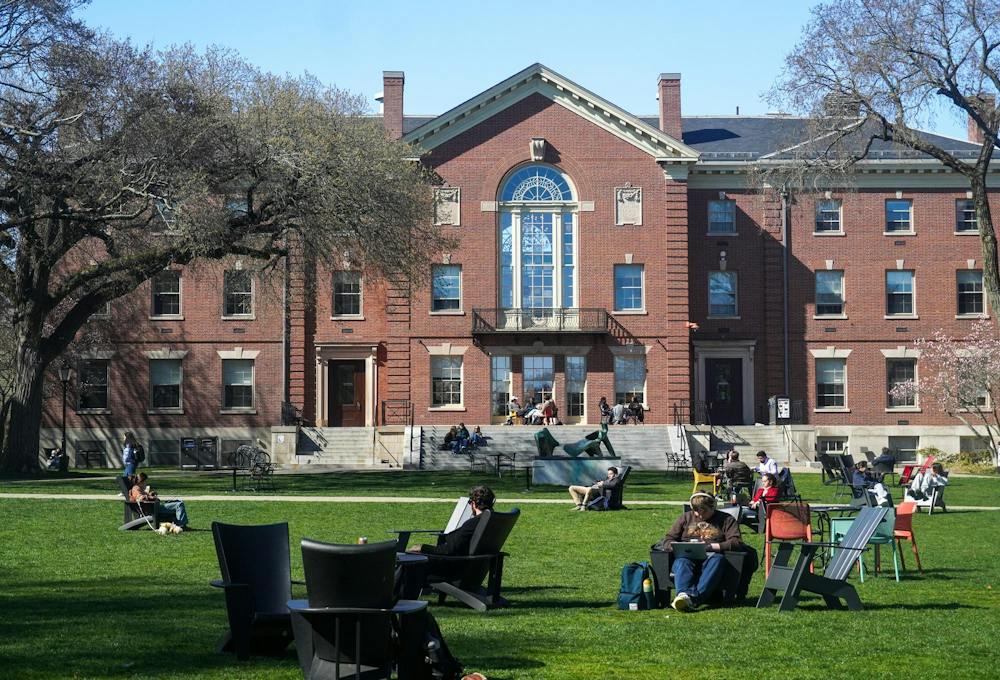
At a campus as diverse as Brown’s, we ought to more actively encourage this kind of mixing from day one of orientation. Affinity groups could be introduced after the first month, once students have already had practice connecting outside their comfort zones. The comfort these spaces provide early on is critical for new students, especially students from minority communities, but it can make it harder to seek out people outside that circle once orientation ends. Bruno groups and smaller peer groups could be formed with intentional randomness, based on a short form asking about religion, culture, ideology and interests, rather than left only to chance. Events like this year’s speed-friending on the Main Green could be reimagined to pair students with demographically or ideologically different peers for a game or a walk around campus, following the same logic that makes randomized roommate assignments consistently effective at building comfort across differences.
Beyond orientation, cultural clubs could rethink who they’re recruiting. Attending a K-pop dance show or Brown Mariachi performance is already an option for everyone, but clubs could try actively recruiting members beyond the culture’s usual base — intentionally promoting diversity within groups. Debate clubs could host informal dinners built around political and ethical topics deemed uncomfortable with the explicit intent not of winning an argument but of simply learning from someone you disagree with.
Brown has a history of encouraging people from all backgrounds to come together, giving us a solid foundation to build conversation across lines of difference. When Brown was chartered in 1764, it became the first college in the United States to codify equal admission and instruction regardless of religious affiliation, at a time when Harvard and Yale served Congregationalists and Princeton served Presbyterians almost exclusively. Carrying this founding instinct forward goes beyond admitting students who see the world differently. It means building bridges between them, so that this legacy we inherited is still alive for generations to come.
Anoushka Jain ’30 can be reached at anoushka_jain1@brown.edu. Please send responses to this column to letters@browndailyherald.com and other opinions to opinions@browndailyherald.edu.


