
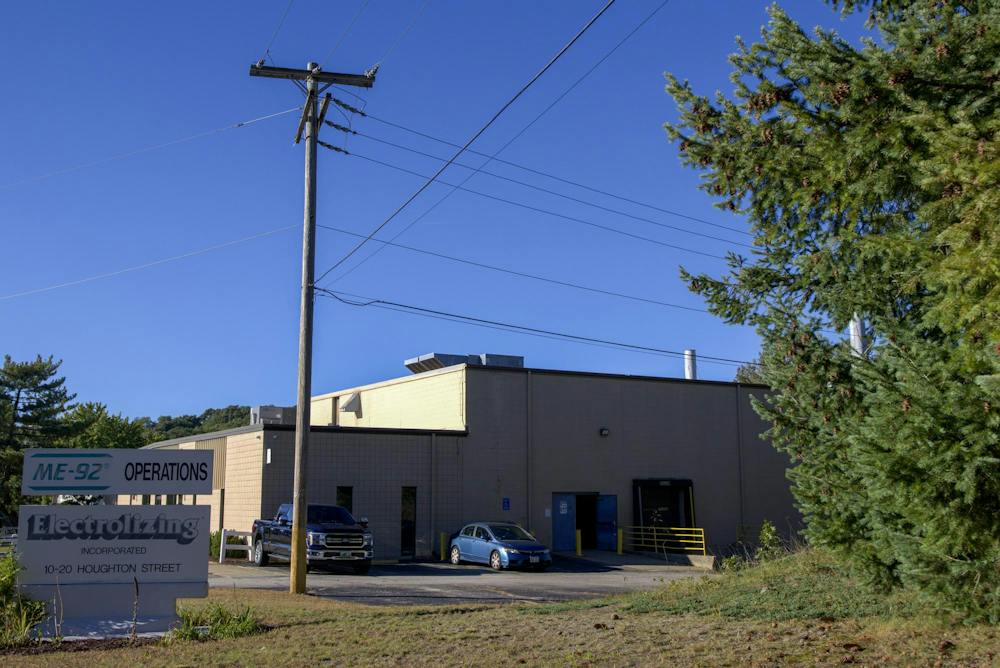
Electrolizing Inc. — a chromium-coating facility located in northern Providence — was found to have violated 13 hazardous waste regulations by the Rhode Island Department of Environmental Management.
The violations, cited in a Notice of Intent to Enforce sent to the plant’s general manager, include insufficient labeling, failure to report spills and inadequate waste storage procedures.
RIDEM visited the plant on Aug. 26 after receiving two anonymous employee complaints the day before. These complaints alleged that a tank in the plant containing hazardous chemicals including hexavalent chromium, a highly toxic carcinogen that was at the center of the Erin Brokovich case, was leaking into the ground.
Upon arriving, the state agency found large quantities of liquid waste in containment pits — which act as emergency storage for chemical spills — and a painted over chromic-acid stain on the exterior of the plant wall. Subsequent testing revealed that the containment pits exceeded the toxicity threshold for both chromium and cadmium — which is also a carcinogen — and the soil beneath the wall had chromium presence close to regulatory limits.
According to the notice, RIDEM concluded that three containment pits were to be considered hazardous waste because Electrolizing Inc. “stored chromic acid mixtures well beyond a duration considered to be an immediate response” and actively received “hazardous waste through regular operations from spills and leaks.”
Electrolizing Inc.’s general manager did not respond to The Herald’s requests for comment.
During a Sept. 1 phone call between RIDEM, the plant manager revealed the plant does not currently have a procedure to pump out the containment pits once hazardous waste is released or spilled into them. The pits themselves are covered with open grating, the notice added.
“I mean the most imminent concern would be to the employees because of the exposure that they would have, especially if it’s open pits and they can inhale it,” said Joseph Braun, a professor of epidemiology and director of the Center for Climate, Environment & Health. “But on top of it, the contamination of local watersheds is important,” he added.
The Woonasquatucket watershed is close to Electronizing, Inc.
Braun, who researches chemicals that disrupt the endocrine system, noted hexavalent chromium and the combined presence of other chemicals in the plant could compound the negative effects. He added the presence of chromic acid in the soil could pose a risk to “children who play outside” or other local residents.
Prior to RIDEM’s notice, reports of the violations circulated amongst various agencies, including OSHA which inspected the facility on July 31 and is still investigating the case.
The Narragansett Bay Commission also issued the company a Notice of Violation for not providing proper notification of the spill, according to Jamie Samons, a spokesperson for the commission.
This is not the first time that Electrolizing Inc. has been cited. In 2017, the company was cited for three violations by RIDEM, including issues regarding hazardous waste storage and waste labeling. The company did not contest the notice and paid a $3,750 fine.
Carl Austin Miller Grondin MPA’24, spokesperson for Mayor Brett Smiley, wrote that “the City does not independently administer Rhode Island’s hazardous waste regulatory program,” because they are regulated by state and federal agencies.
He noted that “the City takes concerns with facilities operating near residential neighborhoods seriously,” and that the city will “review the findings from RIDEM’s investigation and enforcement process and determine whether there are any additional actions the City’s authority can take that will strengthen protections for our residents.”

Maxwell Silver is a senior staff writer covering health and environment.


