
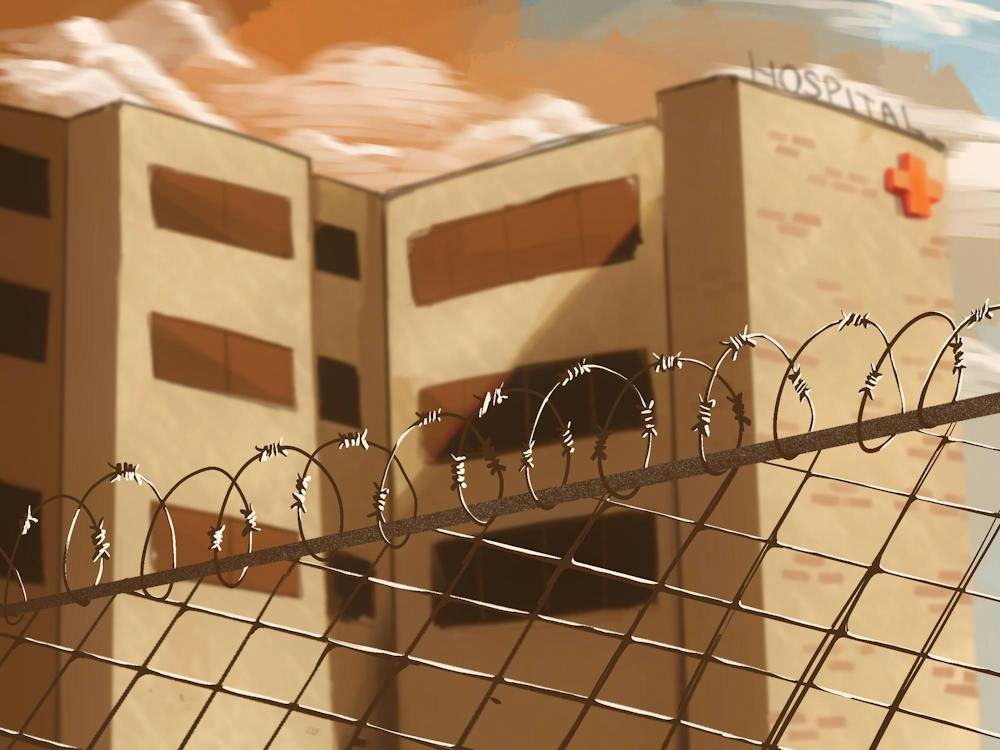
On Oct. 1, changes to Medicaid qualifications that remove immigrants of various statuses — including refugees, asylees, parolees and victims of human trafficking — from coverage went into effect in Rhode Island.
The change comes from H.R. 1, or the One Big Beautiful Bill Act, signed by President Trump in July 2025.
According to Kerri White, communications director for the R.I. Executive Office of Health and Human Services, the state “sent a series of notifications to impacted individuals in the past several months including mailed notices, digital notices, emails and text messages.”
“At least 100 of our clients, people we serve, have received letters from the Department of (Health and) Human Services notifying them that their Medicaid has been closed,” Omar Bah, founder of the Refugee Dream Center, said in an interview with The Herald.
“Some have not even adjusted properly to the U.S. society or community, and then the worst part is, a lot of them don’t even know. They are not even aware that their Medicaid has been shut off,” Bah added.
In response to the new restrictions, the Refugee Dream Center is partnering with Street Medicine — a Warren Alpert Medical School program dedicated to providing medical services to unhoused populations — to provide care to the individuals who have lost insurance.
“All of the populations listed already struggle with finding food and paying for housing, and they are scared because of the changes in immigration policy. Now they also have to worry about medical care,” wrote Kate Murphy, spokesperson for Dorcas International, a R.I. non-profit that serves immigrants and refugees.
“Losing medical care is not only placing a strain on the medical system, but it’s leaving our immigrants, refugees, asylees and survivors of domestic violence and trafficking in an even more vulnerable situation,” she added.
In total, as of June 2026, over 250,000 Rhode Islanders were enrolled in Medicaid. According to estimates from the Congressional Budget Office the Medicaid and Children’s Health Insurance Program restrictions enforced by H.R.1 will lead to 100,000 individuals becoming uninsured nationwide by 2034, reducing federal spending by $6.2 billion.
“It is a little early to be able to gauge the impact of the (Oct. 1) changes, but we can expect more of the same — patients delaying care and having to pay out-of-pocket when they do need the care. Or they will just wait until they have no choice but to go to the emergency room,” Elena Nicolella, president and CEO of the Rhode Island Health Center Association, wrote in an email to The Herald.
The next H.R. 1 restriction on Medicaid is set for Dec. 31 and will introduce work requirements of at least 80 hours per month or a salary of $580 per month for qualification.
While the Oct. 1 change is estimated to affect fewer than 3,500 individuals in the state, the Rhode Island Current reported, the upcoming work requirement is estimated to put 24,600 Rhode Islanders at risk of lost coverage.
“The state has to create new administrative systems to be able to comply with these federal regulations, and all of those mean more opportunities for mistakes and more opportunities for people to fall through the cracks and lose benefits that they are otherwise eligible for,” said Nina Harrison, policy director for the Economic Progress Institute, a R.I. organization focusing research and policy for low-income Rhode Islanders.
Alongside qualification restrictions, H.R.1 is also expected to cause a loss of $275 million in federal Medicaid funding for Rhode Island beginning in fiscal year 2028, according to the Economic Progress Institute.
“I think most people understand that we already have a fairly fragile healthcare system here in this state, with a shortage of primary care providers,” Harrison said.
Harrison added that the combination of reduced coverage and budget cuts will overwhelm hospitals, free clinics and health centers, “who are going to be left trying to take care of the people who have lost health insurance.”

Maxwell Silver is a senior staff writer covering health and environment.


