
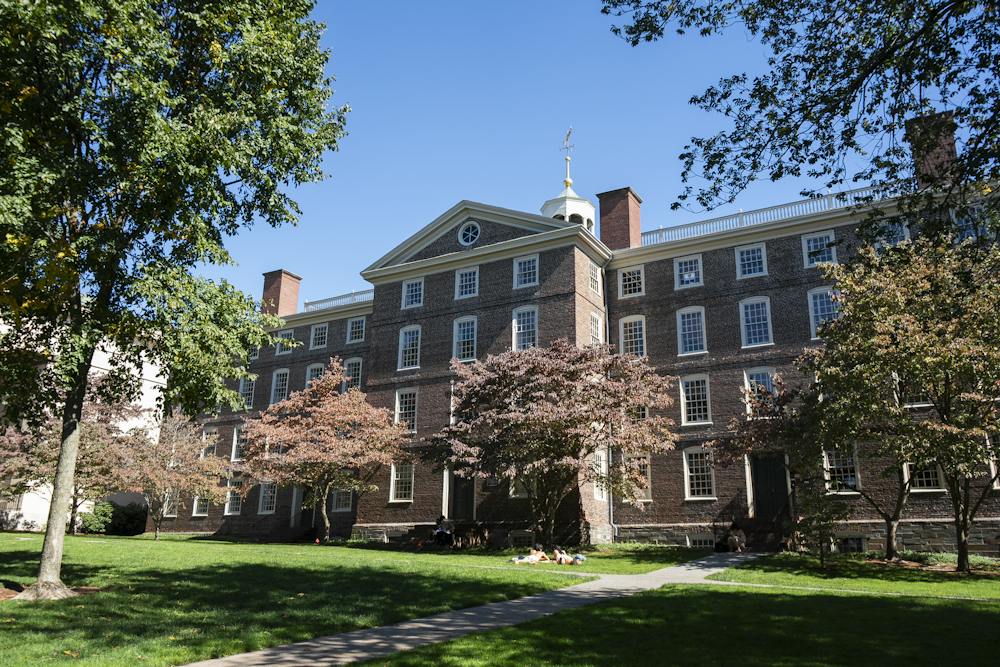
Students have five opportunities to propose independent concentrations each year. As Nov. 1 passes, another cohort of students unsatisfied with Brown’s more than 80 concentrations applied for an independent concentration, allowing them to shape their unique interests into an official degree program.
To Benjamin Rozea ’27, an independent concentration was “the best way” to get what he wanted from his undergraduate experience, allowing him to prioritize “learning over pre-professional preparedness in a way that’s been super gratifying.”
Rozea studies “Material Culture, Embodiment and Identity,” which combines performance studies with the study of material history to consider “the effects of wear and clothing as they relate to identity formation.”
Students interested in pursuing independent concentrations can submit proposals for approval before five different deadlines throughout the school year: Oct. 1, Nov. 1, Feb. 1, March 1 and April 1. The Herald spoke to students about the application process and their experiences with their independent concentrations.
Rozea said that a key component of a proposal for an independent concentration is demonstrating what differentiates the course selection from an existing concentration. They said they worked on their application for around four months, and it was ultimately approved after their first proposal.
Proposals may require several revisions before approval. Jacqueline Lee ’27 was previously a member of the independent concentration subcommittee of the College Curriculum Council, which reviews submitted concentration proposals. In an email to The Herald, she wrote that “almost everyone is required to revise their first submission” before it is approved.
Lee added that from the subcommittee’s perspective, an independent concentration should be “truly interdisciplinary” and provide “insight that cannot be accomplished simply by double concentrating.”
She noted that students with independent concentrations are required to pursue a senior capstone thesis. “Having a deep understanding and clear explanation of the proposed area of study is super important to convey your goals in pursuing an IC,” she wrote.
According to the Curricular Resource Center website, around 50% to 70% of proposals are approved each year.
Lee noted it was “super rewarding” to be a member of the subcommittee because she “got to see some of the interesting and unexpected ways (her) classmates were taking advantage of the Open Curriculum.”
Students must find a faculty member to support their concentration and meet with an independent concentrator dean and coordinator before submitting a proposal. In addition to detailing their reasons for pursuing their concentration, students must also design their intended curriculum.
Rozea noted that this curriculum is “tentative” as course offerings change. “You can find other courses that kind of fit those slots as they change,” he said.
Sage Freeman ’28 created an independent concentration where she studied “Infectious Disease and Population Health,” and examined infectious diseases through the lens of biology, statistics and humanities. But Freeman ultimately switched out of her independent concentration because the independent concentration parameters are “quite rigid,” which made it difficult to fulfill her pre-medical requirements.
Siona Lewis-Coffey ’29 is currently working on developing an independent concentration focused on community-centered design, in which she would study “how art, activism and design can be utilized to build things that bring people together.”
“I feel like design engineering is too engineering-based and urban studies is too humanities-based for my interests — I was looking for something to bridge the gap between the two,” she wrote in a message to The Herald.
Right now, she is working on her proposal and has had several advising meetings with faculty members, as well as staff members at the Curricular Resource Center and the Center for Career Exploration. Lewis-Coffey has also had “informal conversations with students, faculty and others who have helped shape (her) vision of this concentration.”
“While the IC proposal format may seem daunting on first look, all of the questions seem meaningful and valuable for creating your own concentration,” she added. “I have been forced to reconsider my IC idea in a way that I think is making my concentration and time at Brown more meaningful.”
Rachel Wicker is a senior staff writer covering affinity and identity. She is from Athens, Georgia and plans on concentrating in English on the nonfiction track and International and Public Affairs. Outside of writing, she enjoys reading books of any genre and doing yoga.
Seyla Fernandez is a senior staff writer covering faculty.


