
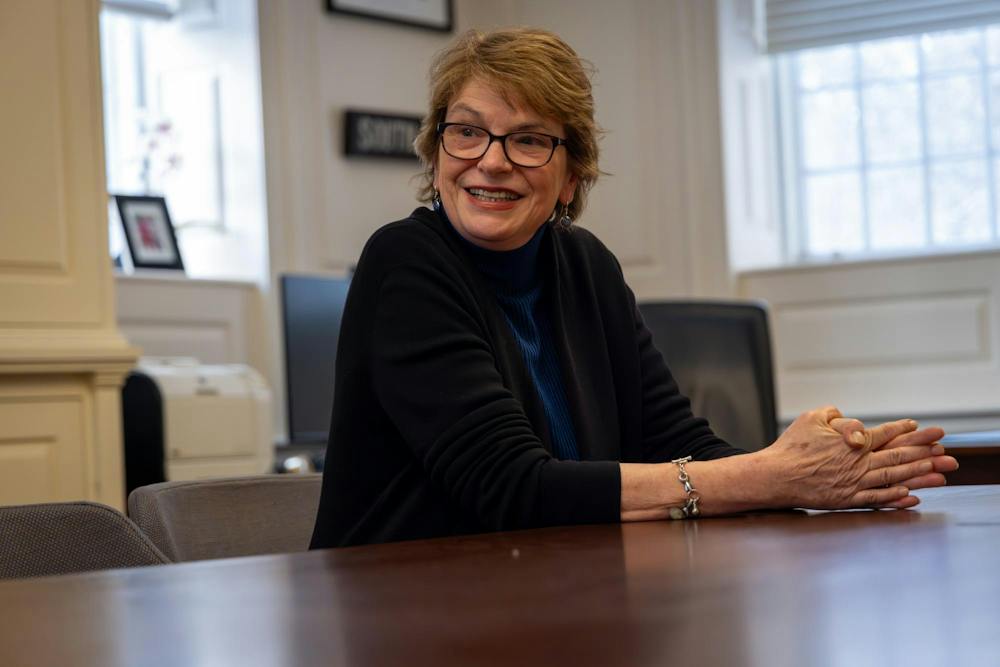
Nine years ago, President Christina Paxson P’19 P’MD’20 delivered the last documented “State of Brown” Address. The event had been hosted regularly by the Undergraduate Council of Students since 2004.
The State of Brown let students hear directly from the administration on their perspectives and plans on the year’s most important issues. In its final known installment in 2017, Paxson discussed pressing issues like growing graduate programs, the importance of international student socioeconomic diversity and the University’s Diversity and Inclusion Action Plan. The University president was the main speaker, but many events also factored in direct question-and-answer sessions with relevant administrators. Though the tradition petered out before an anticlimactic conclusion in 2017, the event showed that Brown values a dialogue between students and administrators. Brown should use Paxson’s upcoming departure as an opportunity to reestablish a culture of transparency, trust and communication with the student body by holding a State of Brown Address this year.
While Brown does provide regular communication with students through emails, press releases, reports and Today@Brown announcements, this communication can feel sporadic and has its fair share of issues. Our proposed State of Brown address would be a single, thorough event that helps mitigate these problems.
Our vision for the event includes Paxson as keynote speaker, with the Provost, chief financial officer, representatives from the Brown Corporation and other top administrators on stage to answer questions. The event should be widely publicized and open to all faculty, staff and students. It could open with a brief presentation from the president on the University’s current financial and academic state, the administration’s most pressing challenges and future visions for the University’s biggest projects, followed by a substantial, live Q&A forum in which attendees can pose questions to the present administrators. The event should also be recorded or transcribed for students unable to attend but keen on staying informed of administrative priorities.
The University’s current communications are at different times and in different forums, which makes keeping up with the materials challenging. While many Brunonians care about what happens at the administrative level, they’re still busy and sometimes disorganized college students. A single event in the academic calendar aimed at encapsulating the spirit of all of these communications would ease the ability for students to keep up with school affairs.
Not only can the current campuswide communications feel disparate and random, but they are also inevitably one-sided. When the University releases updates to students, it presents issues from the institutional perspective. For example, a Today@Brown message from Wednesday covers the University’s policies on student artificial intelligence use and repercussions for violations. It would appear the University is responding to the cheating scandal in Economics Professor Roberto Serrano’s class last semester, but there is no mention of it in the message.
And in this existential moment, as Brown grapples with threats to its very purpose, a dialogue between the University and its students has never been more necessary. In the last year alone, Brown experienced an encroaching federal government and widespread cheating with AI. The year was also emotionally strenuous as the campus recovered from a tragic mass shooting. Such events understandably leave students with questions. An in-person event where administrators answer questions live would allow for the University community to feel connected to the people shaping Brown’s future. Such face time would also humanize administrators, who often appear as distant names on a screen for many undergraduates.
Critics of the University frequently argue that the administration makes decisions without consulting student perspectives. After the Office of Residential Life changed the selection process for program and theme housing last fall, student activists complained that the decision was made “without consulting with program houses.” In 2024, students criticized the Corporation for lack of transparency in its vote not to divest from companies with Israeli military ties. And in response to the federal government’s attacks on higher education, Brown Rise Up circulated a list of demands for the University, which included increased transparency from the administration. Not only would the State of Brown provide such demanded transparency, it would also encourage civil discourse between these parties — allowing passionate students to feel heard by their leaders.
Previous reporting from past instances of this address suggests that the event was plagued with weak turnout. We believe the reintroduction of this event amid a tumultuous period for higher education and an important presidential transition would inspire students to attend in higher numbers. The first State of Brown Address in 2004 saw huge turnout and was “wildly successful.” A 2026 comeback would similarly pique students’ interest, as no current students have experienced one.
While, as president, Paxson has addressed the community twice a year — at Convocation and Commencement — these speeches are often promotional and are primarily attended by first-years and seniors. Holding the State of Brown during the 2026-27 school year would provide all students with the opportunity to hear Paxson’s voice live one last time as their president.
Editorials are written by The Herald’s editorial page board, and its views are separate from those of The Herald’s newsroom and the 136th Editorial Board, which leads the paper. A majority of the editorial page board voted in favor of this piece. Please send responses to this editorial to letters@browndailyherald.com and other opinions to opinions@browndailyherald.com.


