
On Sept. 9, Gov. Dan McKee became the first incumbent to lose a Rhode Island gubernatorial primary in more than 30 years. McKee didn’t lose by a slim margin, either — he suffered a 24-point defeat to challenger Helena Foulkes.
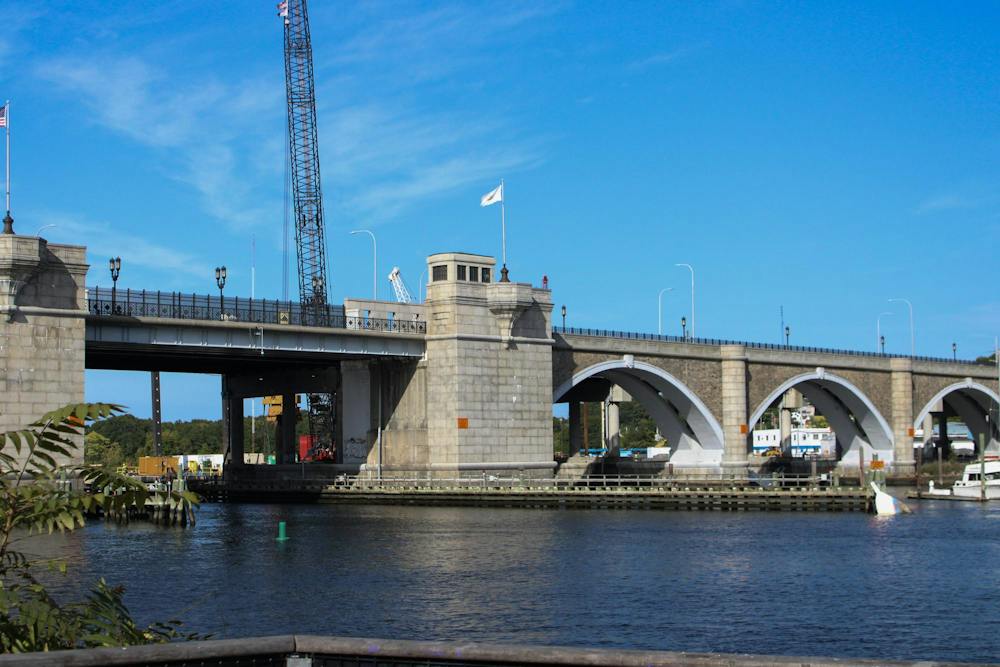
McKee secured his loss long before votes got counted on Sept. 9. His electoral failure can be traced back to December 2023, when the westbound Washington Bridge — an essential geographical link from East Providence to Providence — was found at imminent risk of collapse and quickly shut down. The reconstruction that followed has defined McKee’s last term. Data gathered before the Sept. 9 primary established a causal link between the bridge’s closure and McKee’s dismal political viability, with more than 79% of voters doubting the timeline and cost of the project. Throughout the primary, Foulkes capitalized on the salience of the crisis, framing the bridge as a representation of the dysfunction and lack of accountability plaguing McKee’s office.
Incumbent losses in gubernatorial primary races are rare — losses attributable to a hyperlocal infrastructure crisis are rarer. In this sense, McKee is an anomaly. However, interpreting McKee’s loss as an isolated political blowout would be a mistake — voters should view his shortcomings as a microcosm of Rhode Island’s broader infrastructure crisis.
McKee’s administration is clearly responsible for the bridge crisis. First, the administration withheld a critical forensic engineering audit from the public for more than a year. When leaked, the documents disclosed that state inspectors had dismissed the bridge’s structural warning signs for decades. In the litigation that followed, state attorneys were accused of withholding the governor’s private correspondence, forcing the court to compel their release. Second, the administration’s first request for proposals to fix the bridge’s structural issues was so poorly written that it yielded zero bids from contractors, resetting the project’s entire planning phase and increasing costs and wait times. Third, even with overwhelming bipartisan pressure, McKee refused to fire Rhode Island Department of Transportation Director Peter Alviti and maintained a hostile posture when pressed about timelines or oversight.
These oversights had major consequences. Diverted tourism, slower commerce and lost business access from the Washington Bridge crisis are projected to cause a $748 million revenue loss by 2029. Immediately following the closure, one resident said that his commute — which had previously taken around 40 minutes — took about four-and-a-half hours. More concerningly, the closure lengthened ambulance transport times for patients traveling from the East Bay to Providence-area hospitals. This single corridor is crucial to the state’s daily life, public safety and economic survival, but it is not the only piece of infrastructure Rhode Island relies on and has been ignoring for decades.
Rhode Island ranks near the bottom for infrastructure quality nationally, with nearly a third of its major and urban roads in poor condition. This didn’t happen in a day. Rhode Island has a kick-the-can approach to budgeting and maintenance. Because fixing bridges takes years and yields minimal short-term political reward, quick solutions — such as diverting infrastructure funds to prevent deficits or turning to audits instead of system reforms — are enacted to balance budgets, with crucial improvements often delayed. This is demonstrated by the Pawtucket River Bridge, which faced years of deferred maintenance. In 2007, inspections revealed the bridge was so degraded that RIDOT had to abruptly implement a 22-ton weight limit. Rhode Island has a political culture of waiting for catastrophic failure before making structural investments; the Washington Bridge was rife with infrastructural problems, many of which were left unaddressed until the point of near-collapse.
To fix this, Rhode Island should change the way bureaucracy functions in times of infrastructure emergency. The state would benefit from a standing roster of engineering firms for infrastructure emergencies. This would ease the bureaucratic paralysis that comes with continuous background reviews. To lessen contractor liability, legislators could update the Rhode Island Code of Regulations to make infrastructure contracts less legally risky for developers.
States like Pennsylvania exemplify the benefits of quick-moving bureaucracy. Months before the Washington Bridge crisis commenced, Pennsylvania faced an almost identical crisis: the collapse of a critical portion of I-95. Pennsylvania Gov. Josh Shapiro forwent the institutional processes that stymied McKee, declaring a statewide disaster almost immediately and waiving bidding formalities; the state awarded a no-bid contract to a trusted construction firm. He mobilized crews 24/7 — the highway was ready for traffic in just 12 days.
As Shapiro’s response demonstrates, addressing Rhode Island’s dismal infrastructure ratings will require aggressive reactions to aggressive problems. Infrastructure isn’t a sexy political issue, but it is the lifeblood of any functional state. It supports healthy economies, the ability of communities to grow, quality of life and public safety. Right now, Rhode Island’s infrastructure is failing the public. Something needs to change, because while McKee lost, Rhode Island shouldn’t.
Anya Kleinman ’30 can be reached at anya_kleinman@brown.edu. Please send responses to this op-ed to letters@browndailyherald.com and other opinions to opinions@browndailyherald.com.


