
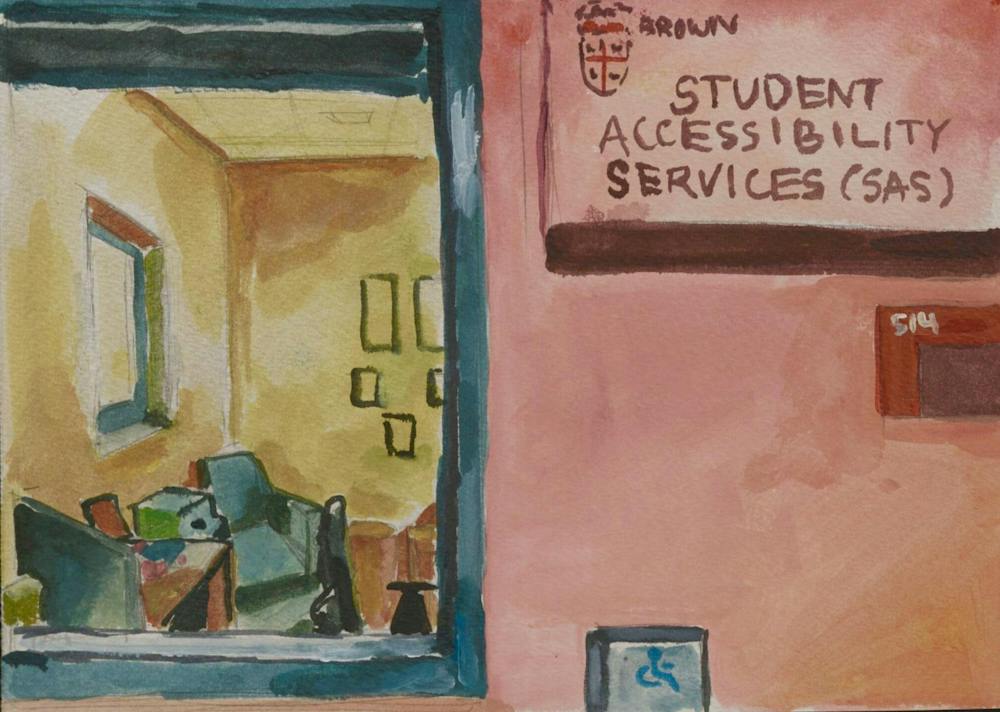
In June, Student Accessibility Services unveiled a new platform called Accommodate for students applying for and managing their academic accommodations. SAS implemented Accommodate to help improve access and reduce barriers, but several students expressed difficulties with the transition to the new system.
Before Accommodate, SAS used a different platform called Clockwork, which is commonly used across United States universities, Allen Kropp — interim director of SAS — and Desirae Mix — associate director of SAS — wrote in an email to The Herald.
According to Kropp and Mix, many schools have switched to using more modern sites like Accommodate to streamline the processes. Instead of having to complete multiple steps — such as scheduling meetings with their accommodations specialist, submitting forms and documentation and managing existing accommodations — across different platforms, students can complete all of these tasks on Accommodate.
But many students who have accommodations have found the new platform inefficient and difficult to navigate.
Lindsey Hayward ’27 — who has received housing, dining and academic accommodations since she was a first-year — said she found the old Clockwork system easier.
“It was a very clear format,” Hayward said. “It was more visually understandable.”
“The design of (Clockwork) may have been a bit archaic, but it was effective,” Nick Cavallo ’29 said.
Multiple students interviewed by The Herald said they learned about the new Accommodate system from an SAS email sent on Sept. 8 — the day before the first day of classes for the fall 2026 semester.
“I’m sure with time I’ll learn better how to use it, but I do think that if (SAS) were going to transition into a new system, they should have made that more clear, especially how to use the new system,” she said, adding that an earlier notice would have been helpful.
Alexandria Goodman ’29, who is a copy editor for The Herald, said she also would have appreciated an earlier notice for the implementation of Accommodate. She said that she only found out about the switch after visiting the SAS website herself.
According to Kropp and Mix, SAS has been updating their website about the change since early June and sent out communications about the switch in late June to all students receiving accommodations.
“My disability is already very much a burden, especially with school,” Hayward said. She added that people with disabilities have to adapt every day, and trying to get used to a new system can take up valuable time.
“We recognize that students managing disabilities are already navigating academics and many other demands, and the accommodations process should not create unnecessary additional barriers,” Kropp and Mix wrote.
Cavallo also experienced trouble with the new system, particularly in scheduling an SAS appointment, but he was able to resolve the issue over emails with SAS. When he initially tried using Accommodate at the beginning of the semester to set up an appointment, there were no meetings available through mid-October, he said.
“I do commend them for responding and taking action so quickly,” Cavallo said. “But if I had a more complicated issue, I don’t know what would have happened if I’m not able to get an appointment.”
Kropp and Mix wrote that students who previously had accommodations and are transitioning to the new Accommodate system would not have to resubmit their documentation and that all the previously submitted information is stored in the new database.
Kropp and Mix wrote that while the new Accommodate system helps refine the accommodations process, SAS recognizes it will require an adjustment period.
“Since the June launch of Accommodate, SAS has received questions from students and faculty about aspects of the new process and has used that feedback to clarify instructions and make adjustments where needed,” Kropp and Mix wrote. “We expect that process to continue as the system becomes more established.”
Marat Basaria is a senior staff writer covering activism.


