
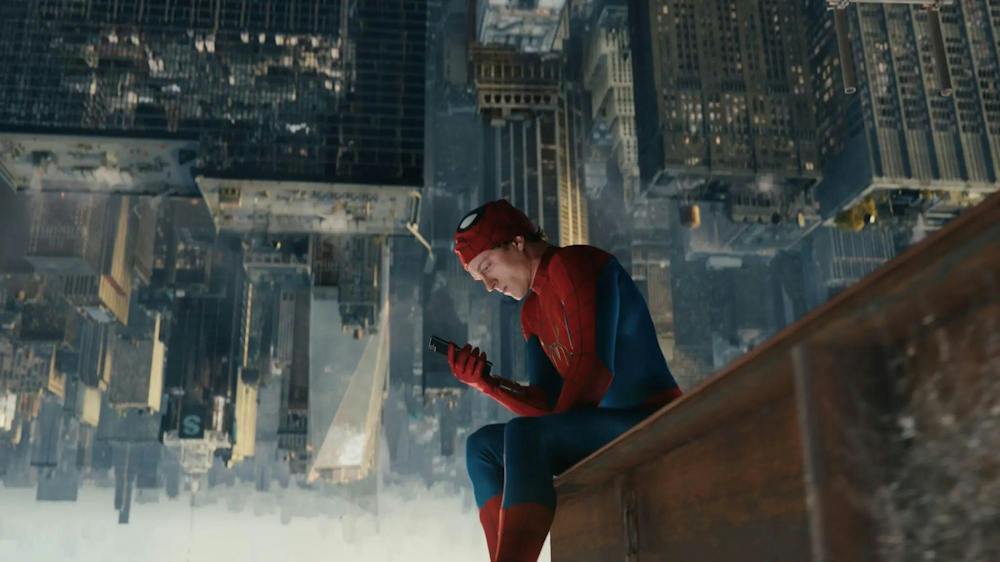
“Spider-Man: Brand New Day” had a smashing theatrical debut with a $360 million dollar opening weekend this summer — shattering a record previously held by “Avengers: Endgame.” The film, directed by Destin Daniel Cretton and boasting dynamic cinematography, is a poignant reminder of a superhero’s humanity.
Forgotten by everyone — including his closest friends — Peter Parker (Tom Holland) leans entirely into his identity as Spider-Man. He undergoes a biological transformation that strengthens the arachnid side of his DNA, and as he attempts to deal with this change, a new threat emerges, forcing Parker to balance his two identities while protecting New Yorkers.
Comedy and emotional depth coexist in a natural and perfectly timed thematic ecosystem, allowing a difficult moment to resonate even if it is followed by a moment of levity. At the same time, scenes displaying fantastic chemistry and wanting between characters act as momentary glimpses of hope that are quickly smothered. The film hits on the headache perennial across “Spider-Man” media: Peter Parker can’t seem to catch a break.
With arachnid transformations aggressively taking over his human side, Parker creates and decides to wear an inhibitor, a device meant to suppress the arachnid DNA to controllable levels. But the gadget only treats the symptoms, and it’s up to Parker to fix the root of the problem — his refusal to reckon with his dual identities. Bruce Banner (Mark Ruffalo) warns Parker with an important question — how can one morally decide which parts of a person’s DNA to express, and which parts to suppress?
As a viewer, it is understandable why Parker decides to wear the inhibitor anyway. After all, he is afraid of losing his human side, which is vulnerable from his self-induced isolation from the people he loves. He worries he can never be himself again if he lets his superhuman side take over, ignoring the fact that his arachnid tendencies manifested as a response to the effects of his long-term feelings of isolation. Despite his apparent irrationality, the audience can understand Parker’s desire for human connection, something damaged by the burden of protecting his friends and the people of New York.
The cinematography is particularly impressive — in high-action scenes where Spider-Man runs through buildings or careens down from staggering heights, the camera follows his every move without dizzying viewers. These sweeping visuals are juxtaposed with closeups of Spider-Man’s eyes, which invite the audience into the isolation Parker grapples with even as he’s swinging through the streets of New York.
But several pivotal characters — such as Ned (Jacob Batalon), Parker’s former best friend — do not get as much screentime as their relevance calls for. By the end of the film, MJ (Zendaya), Parker’s former girlfriend still doesn’t remember who he is, leaving the set-up from “Spiderman: No Way Home” completely unresolved. Without this resolution, “Spider-Man: Brand New Day” leaves many questions to be answered in the next installment.


