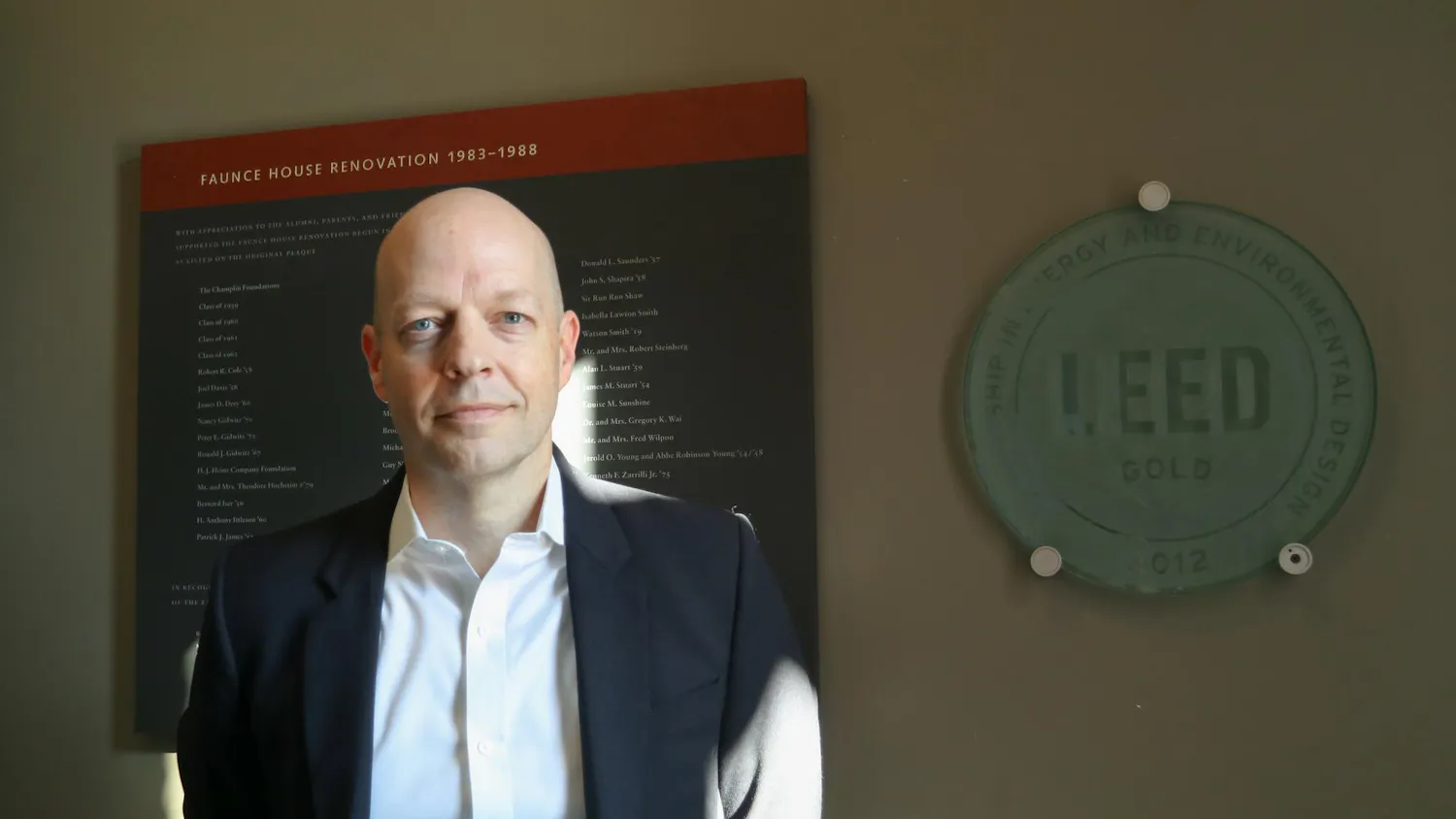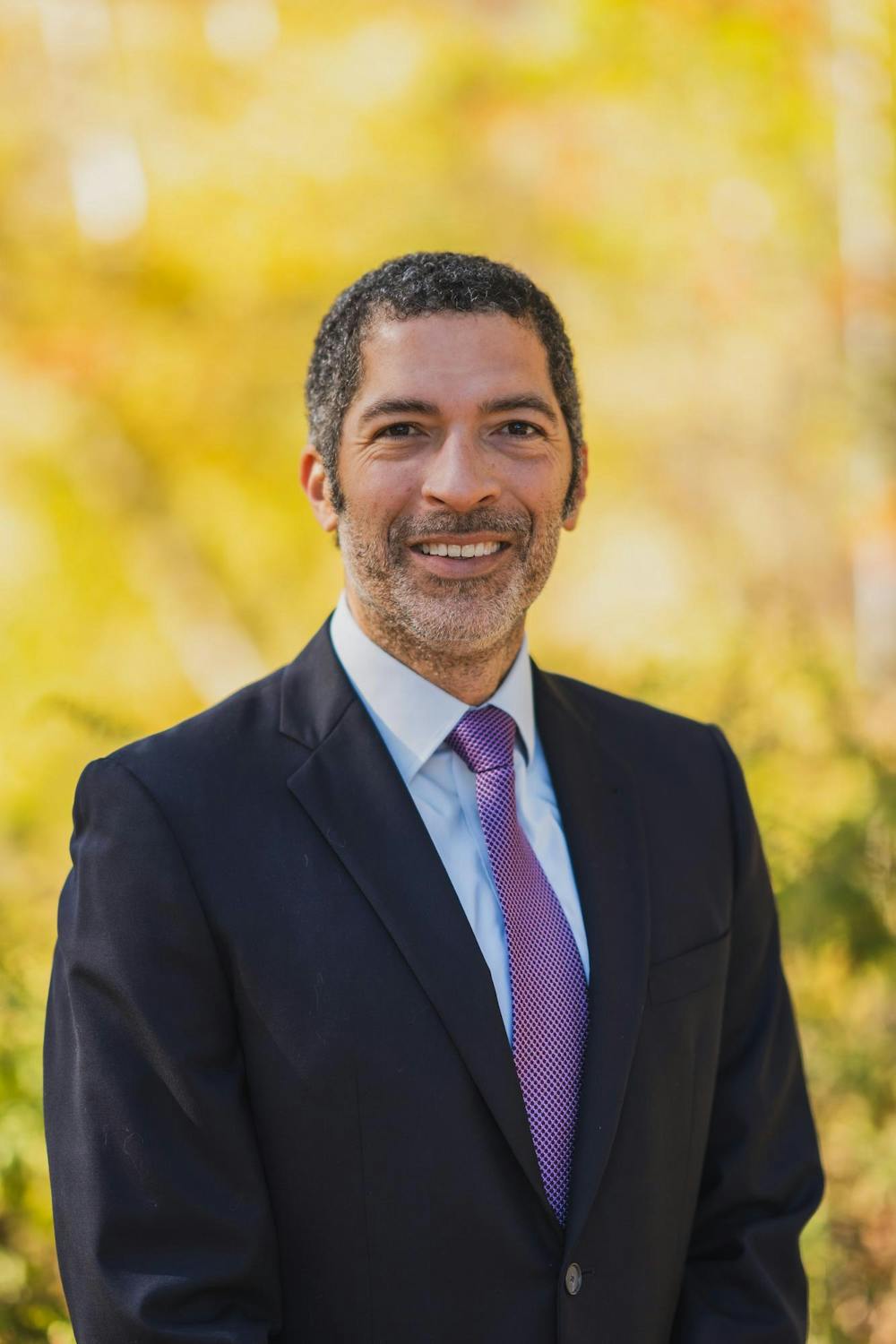
When Matthew Delmont PhD’08 was asked to step into the role of interim provost at Dartmouth, he accepted without hesitation.
On Oct. 8, it was announced that the former Dartmouth provost resigned after a faculty-led committee concluded that he may have violated Dartmouth policies by using artificial intelligence for his publications without proper disclosure. Delmont, a history professor at Dartmouth, was announced as his replacement on the same day the former provost stepped down, and he will remain in the position until June 2028.
Delmont said that when he found out about and agreed to take on the role, things moved very fast, but he’s “been preparing for a decade to take on different leadership roles and be ready when the opportunity arises.”
“The set of circumstances that led to me being named interim provost are not anything that any of us wanted to have happen.”
As interim provost, Delmont’s goals include strengthening internal communications on campus and supporting faculty research and teaching.
“For me, success at the end of this looks like: Have faculty published the books that they’re working on, the articles they’re working on, gotten the grants, have they taught the classes? Are students learning new things? Are we creating knowledge and sharing that knowledge?” he said.
At a time when Dartmouth’s campus is under national scrutiny for the former provost’s potential violation of AI policies, Delmont believes that part of stability is “making sure people know that the regular routines are going to keep functioning.”
To address AI use on campus, Delmont said his first step would be to “do a lot of listening” to better understand how individuals across campus use and perceive AI. Later, he intends to work with deans and faculty to clarify acceptable and unacceptable uses of AI.
“We give faculty a great deal of discretion in how they structure their classes, and AI is going to be the same thing,” Delmont said.
“For myself, I’ve used AI hardly at all, and so I’m pretty novice on this stuff,” he said.
Delmont believes it’s good to have classes with a range of different AI policies, but he wants to increase clarity about those policies.
Delmont emphasized the importance of updating AI policies to reflect the changing technological landscape while staying true to the tenets of the existing policies.
Delmont said he had “no idea” he would become a professor when he got his undergraduate degree from Harvard.
He credited Brown for his journey to academia. After brief stints in consulting and marketing, he decided to apply to graduate school for American studies, and Brown was the only Ph.D. program he was admitted to.
“What I really valued about Brown was that it was big enough — there were great library resources, great faculty to work with — but also small enough that I felt like I was able to interact with a lot of different people,” he said.
Delmont said seeing campus leaders advocate for graduate students during his time at Brown helped him understand the importance of being part of the decision-making process when there are “trickle-down effects for the people who rely on you.”
Delmont, who also served as associate dean of international and interdisciplinary studies at Dartmouth before taking on his new position, said he enjoys administrative work because it allows him to help faculty, students and staff on campus be successful.
“The opportunity to serve as interim provost allows me to try to do that at a larger scale,” he said. “I’m a curious person, so it really gives me a chance to explore that curiosity here at Dartmouth and try to provide some stability during a challenging time.”
John Carey, interim dean of the faculty of arts and sciences and a professor of government at Dartmouth, described Delmont as “the best possible appointment for this position.”
“He listens first, and he then has a really great instinct for problem solving,” Carey explained. “As an administrator, you’re constantly presented with competing interests and people who can’t find their way to a resolution … he’s got a real knack for being able to find a way out of intractable problems.”
Marcia Chatelain PhD’08, a professor of Africana studies at Penn, who met Delmont when they were both in the same graduate program at Brown, described him as “a person of great integrity, an incredible scholar (and) a really thoughtful human being.”
“Even though this is an unusual circumstance… I think that Dartmouth will be better for it,” she added.
“I know I’ll encounter frustrations, but I want to keep remembering what a tremendous privilege it is to have an opportunity to be in a really important leadership role at a place like Dartmouth at a time like this,” Delmont said. “I think the work that we’re doing…it’s absolutely vital to our communities, to the future of our country, and I think I’m really privileged to be part of that.”

Samah Hamid is a section editor covering faculty and career & alumni. She is from Sharon, Massachusetts and is concentrating in Biology and Middle Eastern Studies. In her free time, you can find her taking a nap, reading, or baking a sweet treat.