
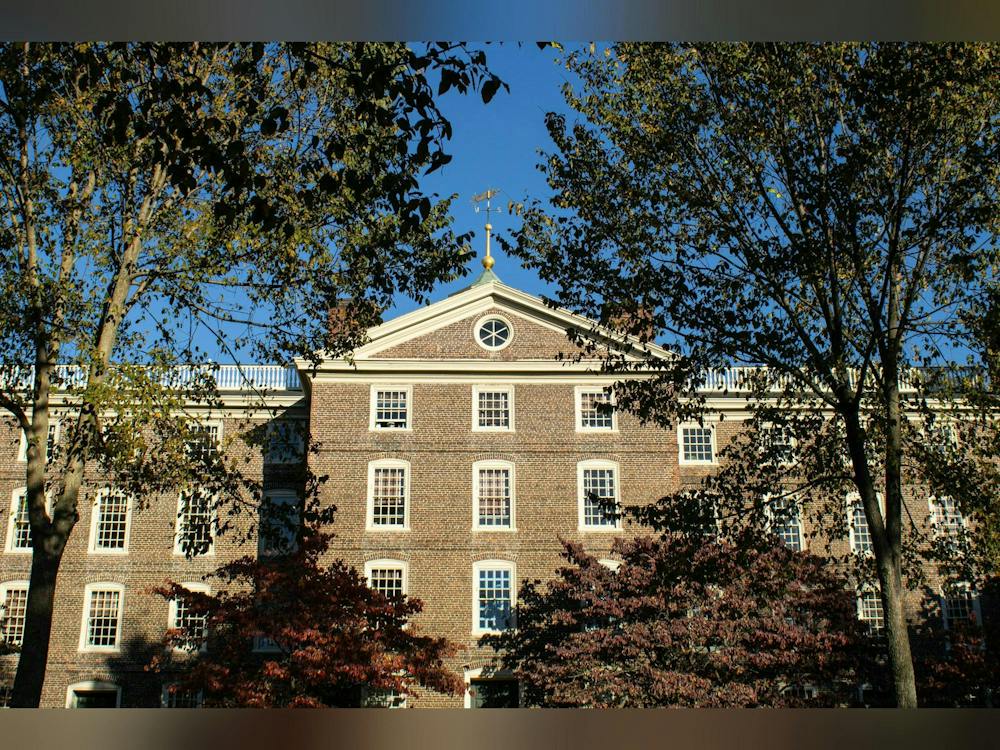
Brown was ranked 98th of 261 schools in the 2027 College Free Speech rankings compiled by the Foundation for Individual Rights and Expression, marking a continued upward trend from the 2025 and 2026 rankings.
FIRE, a nonprofit civil liberties organization dedicated to protecting free speech, gave Brown an overall score of 62.5 out of 100 and an overall letter grade of “D.” Ratings were partly determined by the 289 respondents to FIRE’s student survey about how they “perceive free speech” on campus.
According to FIRE’s website, Brown’s score was penalized due to a “speech controversy” that involved the Undergraduate Council of Students denying recognition to a student group on campus.
Last spring, a group of students attempted to establish a chapter of the conservative group Turning Point USA at Brown, the Brown Spectator reported. FIRE’s website references the Brown Spectator’s reporting, stating that the UCS’s decision suggests potential “viewpoint discrimination.”
“TPUSA was rejected due to its similarity to other debate clubs on campus,” such as Brown Political Union and Brown Debating Union, and “was not rejected for political reasons,” Tommy Medlin ’27, chair of student activities for UCS last spring, wrote in an email to The Herald. Medlin acted as the Student Activities Committee representative for TPUSA, which involves meeting with each prospective group for a 15-to-30-minute conversation about their goals.
FIRE’s website cites additional information from the Brown Spectator that suggests UCS’s rationale for rejecting the group “was inconsistently applied,” as there are “numerous left-leaning groups” and “sixteen a cappella groups” on campus.
“This is not a fair comparison,” Medlin wrote in response, stating that clubs like a capella were approved in the past when “criteria to become a new club was much less strict.”
“Now, there is (a) much stricter criteria about ‘distinct niches,’ because only around a quarter of all applications can be approved,” he said, noting that SAO has a cap of 450 active student groups due to funding constraints.
Medlin noted that TPUSA can apply again to “emphasize their differences from other debating organizations on campus.”
A prospective member of TPUSA did not respond to multiple requests for comment.
TPUSA was rejected because it did not receive enough votes from UCS. Medlin explained that after this vote, SAO reviews all club applications to ensure the reasoning behind their acceptance or rejection is fair and to formalize the rationale for that decision.
“SAO serves as an accountability partner, supporting a fair and consistent review process,” Joie Forte, senior associate dean and director of student activities, wrote in an email to The Herald. “Approximately 50 of 80 student groups seeking recognition for Spring 2026 were not approved.”
Brown was ranked in the top 25 of universities in the category of “Openness” and rose over 100 places in both “Self-Censorship” and “Comfort Expressing Ideas.”
Rachel Lee ’27, co-president of Brown’s American Civil Liberties Union chapter, wrote that she is “generally comfortable speaking out on campus, especially with advocacy” and finds most professors and students to be open to different beliefs. But she added that she may have “reservations” when “advocating for an issue deemed ‘controversial’ by the University.”
Lee also wrote that on an administrative level, there have been “real threats to free speech at Brown” in recent years, particularly “in the ways student demonstrations have been punished.” She referenced the suspension of the student group Students for Justice in Palestine in 2024, which she believes was a way of “stifling student speech and protesting.”
University spokesperson Brian Clark wrote in an email to The Herald that while “protest is a necessary and acceptable means of expression on campus,” student activism should not “interfere with the normal functions of the University, include intimidation or harassment of community members or infringe on the rights of others.”
“We are committed to upholding freedom of expression while also respecting the dignity and humanity of others,” Clark wrote.
“Brown students are extremely homogeneous in both political orientation and economic class,” Eva Skelding ’28, communications and outreach director for Brown ACLU, wrote in an email to The Herald. “Because of these two factors, I’ve noticed that people tend to avoid certain topics.”
Skelding wrote that she thinks these factors may negatively impact the type of free speech that comes up “in everyday campus life,” which includes students’ ability to share their views “without social ostracism.”
Aarav Laungani ’29, an international student from Dubai, said that he is cautious about publicly expressing his political beliefs due to concerns for his visa status. But he said that Brown has helped him feel comfortable sharing his views and opinions with peers and classmates.
He added that he was “surprised” by Brown’s ranking.
“I didn’t expect that,” he said. “I thought Brown would be a school where everyone feels like they can give their opinion.”
Additional reporting by Maya Nelson.
Rachel Wicker is a senior staff writer covering affinity and identity. She is from Athens, Georgia and plans on concentrating in English on the nonfiction track and International and Public Affairs. Outside of writing, she enjoys reading books of any genre and doing yoga.


