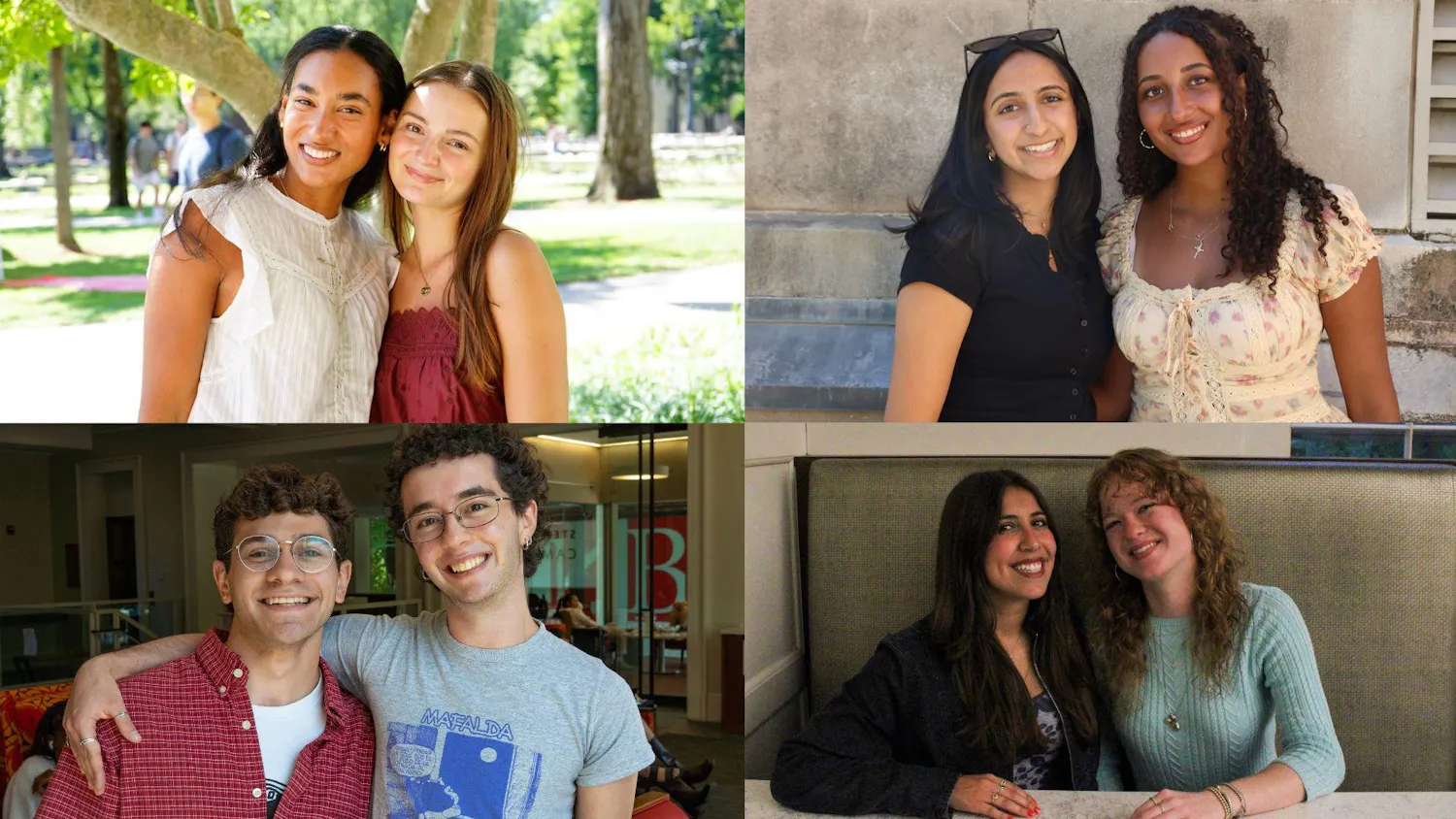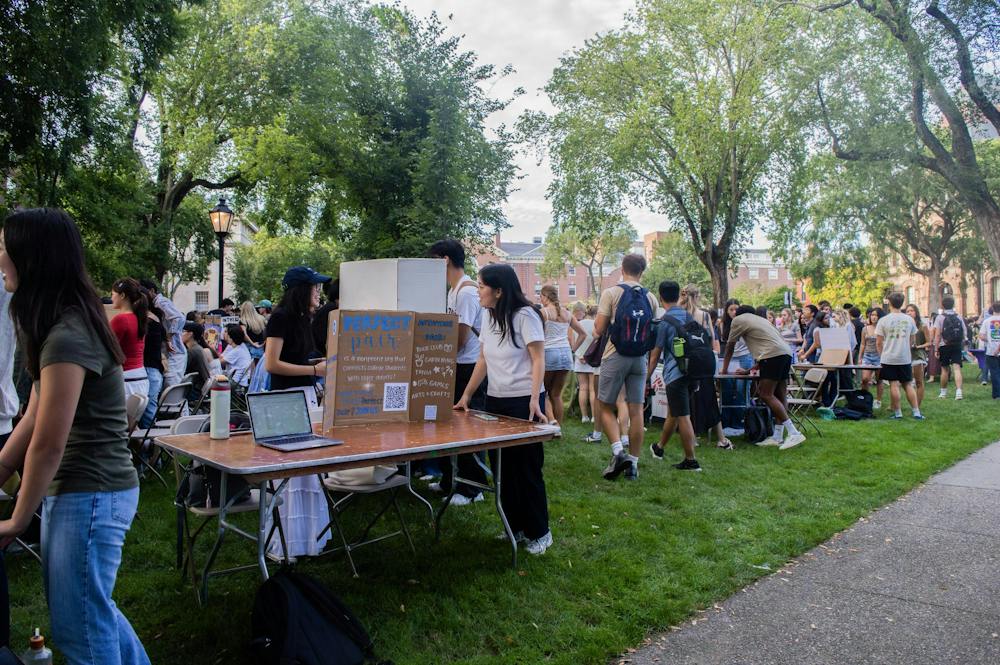
As the fall semester begins, student organizations are recruiting a new wave of members. On a campus with an abundance of selective, high-intensity clubs, some organizations — especially activist groups — embrace unique recruitment philosophies in order to grow a strong membership.
Elliot Byrant ’29, a narrative co-coordinator for Brown Rise Up, joined Sunrise Brown during his first year at Brown after attending “Disorientation.” After he joined Sunrise, Bryant met members of BRU, who at that time were advocating against the Trump administration’s compact.
This is the first semester since BRU’s founding that the organization is formally seeking new members, according to Bryant. BRU is “still figuring out that process,” he added. “We’re establishing a precedent for how to run this organization that’s important to all of us.”
The organization wants to provide opportunities for students with a range of activism backgrounds. For students “on the fence,” BRU is hoping to introduce them to rallies or big events, Bryant said.
“We’re trying to bring people one layer closer from where they are,” Bryant said.
But he acknowledges that protesting can be a bigger decision for some students, and BRU also has club roles that aren’t protest-focused. These positions include designing social media graphics, distributing flyers or organizing events.
“There is a lot to do that doesn't involve going to the rallies,” Bryant said.
“At the end of the day, you’re still going to be at risk,” he said. “The important part is we have positions for people to work on that don’t actually involve going to the rallies.”
When Eva Skelding ’28 first joined Brown American Civil Liberties Union, she said she was not very involved in politics or activism. “I felt like there wasn’t anything that I could do to make a tangible difference about the things that mattered to me and the issues that were on my mind,” she said. Brown ACLU’s focus on local activism appealed to Skelding as an opportunity for her to make a tangible difference.
She joined the club after a close friend introduced her to it, and she is now the outreach coordinator. As part of her role, Skelding helps lead club fair pitches and social media campaigns.
This year, Brown ACLU is “really trying to scale up our club,” Skelding said. “We also want our club to be very approachable to people of all levels.”
The American Cancer Society at Brown also does not have any specific prerequisites for joining. Instead, advocacy co-chair Gavin Li ’28 said the club is looking for “anyone who is willing to make their voice heard.”
“That’s really all an advocate is,” Li said. “Someone who is trying to spread their message to their decision makers to the broader public.”
Previous ACS priorities included advocating for the elimination of cost sharing for secondary breast and blood cancer screenings, as well as programs for tobacco use prevention.
Because of the University’s proximity to campus, the ACS has a “unique opportunity to make a small impact,” Li said. “We have a wealth of hands, people, time that could be contributed to this effort.”
Marat Basaria is a senior staff writer covering activism.